
GMP Sodium Copper Chlorophyllin Powder Manufacturing
Mar 13, 2026
When sourcing a water-soluble chlorophyll derivative for commercial production, manufacturing standards are just as important as the ingredient itself. GMP sodium copper chlorophyllin manufacturing requires controlled raw materials, defined processing parameters, appropriate analytical testing, documented batch records, and consistent storage and packaging procedures. These controls help manufacturers maintain a more predictable ingredient specification from one batch to another. Sodium copper chlorophyllin is a water-soluble, copper-containing derivative of chlorophyll that is normally supplied as a dark green to green powder. It is beneficial for situations where standard chlorophyll extracts are difficult to synthesise due to its water solubility and relatively good colour stability. For B2B clients, however, material selection is about more than aesthetics and price. A commercial order can’t be placed unless the production process, specification, documentation, testing capabilities, and supply consistency have all been assessed.
What Makes Sodium Copper Chlorophyllin Powder Different?
The key to determining the quality of production is to know the difference between Sodium Copper Chlorophyllin and typical chlorophyll molecules. Natural chlorophyll is a porphyrin with a magnesium center and is generally more sensitive to processing and formulation conditions. Sodium Copper Chlorophyllin is made by a controlled chemical conversion process in which copper is added to the chlorophyll-derived matrix and then converted to water-soluble sodium ions.
This conversion changes some of the practical features of the material. Companies may choose a standardised powder that can be used in water-based therapies with greater certainty than employing chlorophyll as a crude plant extract. The actual properties of a commercial item are dictated by its specification, method of production, conditions of purification, and analytical controls, and consumers should thus refer to the technical documentation of the provider rather than relying on a general description of the ingredient.
Chemical Characteristics and Physical Appearance
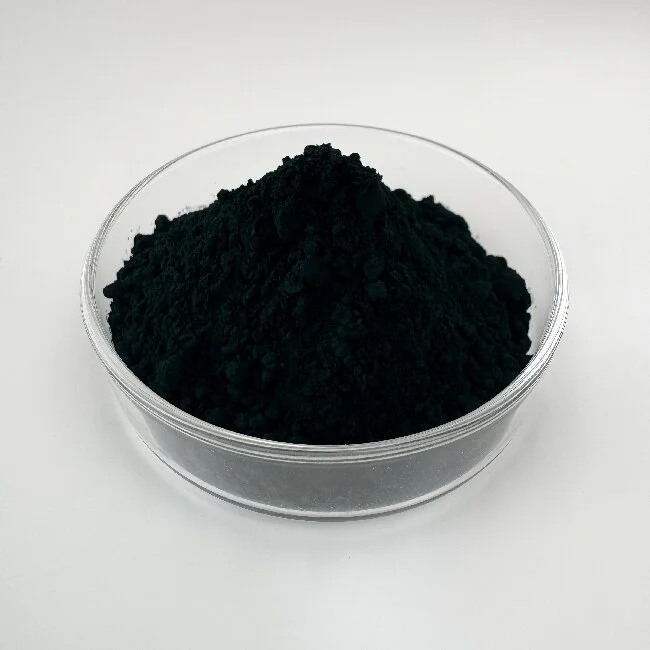
Commercial Sodium Copper Chlorophyllin Powder is often a fine green to dark green powder. The formulation attribute of water solubility is one of the most useful qualities that allows the element to be incorporated into aqueous systems without the necessity of an oil-based carrier.
The copper-containing structure also provides more stability than unmodified chlorophyll under certain formulation conditions. But we should not assume stability. The final product may be affected by light, pH, temperature, content of the formulation, packaging, and storage conditions. Finished product makers should thus check the genuine grade under their specific processing and storage conditions.
Handling may also be affected by particle size and powder qualities. It may be straightforward to weigh, combine, transport, and disperse in manufacturing a material with the right flow properties. Such attributes are especially relevant if you purchase the item in bulk and use it often in different production batches.
Why Water Solubility Matters in Formulation?
Water solubility is a very big economic gain if the end product is mostly water-based. This may simplify the formulation process and obviate the need for a separate dispersion mechanism for the chlorophyll derivative.
This feature may be of relevance in food and beverage formulations, dental care products, cosmetics, and other applications requiring a water-friendly colour addition. The suitability of the chemical depends on the final formulation, applicable laws, target colour, concentration, process temperature, and other elements in the system.
For the procurement teams, this means that the supplier needs to do more than provide the name of a product. The technical package must include information on available specifications, appearance, solubility qualities, analytical parameters, recommended storage conditions, type of packaging, and accessible batch documentation.

How GMP Manufacturing Controls the Production Process?
GMP production is not only a statement about cleanliness. It is a production and quality management technique that keeps manufacturing operations regulated, documented, and repeatable. This process starts with the certification of raw materials and includes processing, purification, drying, packing, testing, and release for sodium copper chlorophyllin Powder.
In addition, a robust manufacturing process should provide tracing of a final batch back to the associated raw ingredients and records of processing. This becomes more critical when the ingredient is part of commercial goods where consistent requirements and supply continuity are required.
Raw Material Qualification and Incoming Inspection
The quality of the beginning material directly impacts the uniformity of the final item. Raw materials should be tested against established acceptance standards before manufacture. These may comprise testing for identification, appearance, moisture, microbiological characteristics, heavy metals, residues of pesticides or other suitable tests, depending on the substance and its intended use.
There is also the vital issue of supplier qualification. Manufacturers should keep adequate documentation on permitted sources of raw materials; protocols for receipt, inspection, and release of incoming supplies should be in place.
A controlled production system should be based on the whole raw material specification and its compatibility for the downstream process, as opposed to just picking plant material based on the appearance of chlorophyll. Consistent sourcing may decrease excessive variance and provide for simpler process optimisation.
Controlled Conversion, Purification, and Drying
Sodium Copper Chlorophyllin is produced via many regulated phases, not through a single extraction process. Processing settings, including temperature, pH, reaction conditions, ratios of materials, and processing time, need to be created and monitored in accordance with the validated or regulated manufacturing methods of the manufacturer.
The copper conversion step is of special interest since the necessary chemical properties are dependent on regulated processing. Purification serves to eliminate undesirable components and processing residues after conversion. Filtration, washing, concentration and other separation procedures may be utilised depending on the production process, product specification, etc.
Drying is another crucial step since moisture may influence the handling, stability and storage of powder. Controlled drying helps develop a material with a more uniform physical profile. The dry powder should be handled in a controlled environment until it is finally packaged to minimise the chance of contamination or inadvertent absorption of moisture.
Batch Testing and Release Procedures
Finished-product testing adds another layer of production control. Tests may include identification, assay or purity-related metrics, moisture, microbiological characteristics, heavy metals and other quality attributes relevant to the intended use, depending on the approved specification.
Analytical procedures should be appropriate for the parameters being tested, and the measurement equipment should be properly maintained and calibrated. A supplier with a quality system in place should also maintain relevant batch records and test data so that any deviations or problems of specification may be examined as required.
For purchasers, the Certificate of Analysis is especially important since it gives batch-specific information rather than a broad description of the product. When considering a new supplier, seeking a current COA and technical specification will assist in ascertaining whether the material is suitable for the proposed formulation.

Choosing the Right Sodium Copper Chlorophyllin Specification
Sodium Copper Chlorophyllin products are not all interchangeable. Distinct applications may need distinct standards, documentation, packaging, or testing requirements. The suitable material must thus be chosen according to the final product and the relevant legal framework.
Food and Beverage Applications
Sodium copper chlorophyllin may be used in food as a colour additive according to the appropriate rules. Its water compatibility is a plus in goods where it is necessary to integrate a green colour into an aqueous or semi-aqueous system.
The real applicability relies on the target market, the amount of permissible usage, the formulation circumstances, and the regulatory requirements of the nation in which the completed product will be marketed. Therefore, buyers should check with the supplier for the required regulatory status and seek supporting paperwork prior to commercial production.
Cosmetic and Personal Care Formulations
Sodium copper chlorophyllin could be a candidate ingredient for companies making cosmetic items who need a green colour or an ingredient derived from chlorophyll. Water solubility is of interest in water-based formulations, although compatibility must always be checked in the actual formulation.
Formulators should test samples for colour performance, dispersion, compatibility with other ingredients, pH conditions, and stability over the expected shelf life. This assessment may be made easier by having a provider that can give technical help and reliable samples.
Oral Care and Other Formulations
Depending upon local regulatory restrictions and formulation purpose, Sodium Copper Chlorophyllin may also be explored for some oral care and other speciality formulations. In these applications, purchasers should not pick the chemical only because it is a chlorophyll derivative. A wide application claim is not as significant as the material specification and how it fits in the whole formula.
The documentation package should also be checked early in the development phase for items that are distributed in several markets. This may avoid a scenario where an ingredient works well from a technical perspective, but does not align with the documentation or regulatory requirements of the target market.
Building a More Reliable Supply Program
Supplier consistency may be more significant than the lowest first quote for organisations who utilise Sodium Copper Chlorophyllin Powder on a regular basis. A little change in raw material qualities might alter colour matching, formulation behaviour, processing conditions and uniformity of the final product.
The quality system of a trusted supplier should be well established for the purchase of raw materials, manufacture, testing, packing, storage and transportation. Communication is just as crucial. If there are changes to specifications, packing requirements, paperwork, or delivery dates, both parties should establish a method for validating the modification before manufacturing or shipping.
Longer-term purchase contracts might assist with inventory planning as well. Forecast-based ordering, agreed specifications, and scheduled manufacturing windows may prevent customers from buying things at the last minute. If a manufacturer has tight formulation criteria, keeping a reference sample from an authorised batch might also be a valuable comparison point for future deliveries.
Improving Quality Consistency Through Documentation
Documentation is frequently seen as an administrative problem, although it is vital for ingredient procurement. An effective documentation package puts the buyer’s quality, regulatory, buying and formulation teams working from the same product information.
Where appropriate, batch numbers, production dates, retest or shelf life information, storage directions, packing details, and COA data should be consistent throughout the relevant papers. If the client demands more testing, the supplier should be able to tell if the test is part of the standard specification or has to be arranged individually.
This level of documentation is especially helpful if the ingredient is provided to more than one manufacturing site or utilised in goods sold in various markets. Also, it provides the buyer with a better foundation for comparison between providers since the assessment relies on quantifiable requirements and not only marketing statements.
Conclusion
GMP sodium copper chlorophyllin manufacturing depends on controlled raw materials, consistent processing, appropriate purification, controlled drying, batch testing, and complete documentation. These elements are important because commercial buyers need a material that can be evaluated objectively and reproduced reliably across production batches.
The water-soluble nature of Sodium Copper Chlorophyllin makes it a practical ingredient for a range of formulations, but the right grade should always be selected according to the application, target market, formulation conditions, and applicable requirements. For procurement teams, the most useful supplier evaluation focuses on the actual specification, COA, testing capability, quality system, sample consistency, packaging, lead time, and long-term supply capacity.
A GMP-focused manufacturing approach can give buyers a stronger basis for controlling raw material quality from the first sample through commercial production. Instead of choosing a supplier only by price, companies can compare manufacturing controls, analytical support, documentation, and supply capabilities to establish a more dependable sourcing program for Sodium Copper Chlorophyllin Powder.
FAQ
1. What is the recommended dosage for Sodium Copper Chlorophyllin Powder in supplements?
For food supplements, the usual daily dose is between 100 mg and 300 mg, but the exact amount depends on the purpose and desired effects. Depending on the treatment goals, different dosage methods may be needed for pharmaceutical uses. Talking to regulatory experts makes sure that local rules and safety guidelines are followed.
2. Are there any safety concerns or side effects associated with this ingredient?
With decades of use in food and pharmaceutical applications, Sodium Copper Chlorophyllin Powder has a good safety record. One very rare side effect is that your urine or feces may turn green for a short time. This is safe and can be fixed. The chemical is GRAS for use in food and follows known safety rules for use in medicine.
3. How can buyers verify supplier authenticity and product quality?
For verification, you have to look at the supplier's GMP, FDA, and other related quality standards approvals. Ask for certificates of analysis for the most current production batches and make sure you can do analytical tests. Reliable sellers give a lot of paperwork, like test results from a third party and proof that they follow the rules.

Partner with Gold Herb for Premium Sodium Copper Chlorophyllin Powder Manufacturing Excellence
Gold Herb is ready to help you with your buying needs by providing pharmaceutical-grade sodium copper chlorophyllin powder along with full quality assurance and technical support. Our GMP-certified factories make sure that the standard of our products stays high, and our global supply chain makes sure that our products get delivered safely all over the world. We are a reliable provider of sodium copper chlorophyllin powder and have over 200 happy customers in 30+ countries. We offer custom solutions, emergency fulfillment services, and committed technical support. Get in touch with info@newgoldherb.com right away to talk about your needs and discover the Gold Herb edge when it comes to finding natural ingredients.
References
1. Thompson, M.J., et al. "Good Manufacturing Practices in Chlorophyll Derivative Production: Quality Control and Regulatory Compliance." Journal of Industrial Biotechnology, vol. 45, no. 3, 2023, pp. 234-251.
2. Chen, L.K., and Rodriguez, A.M. "Comparative Analysis of Sodium Copper Chlorophyllin Manufacturing Processes: Yield Optimization and Purity Enhancement." International Journal of Natural Product Processing, vol. 18, no. 7, 2022, pp. 445-462.
3. Williams, R.D. "Bioavailability and Stability Studies of Chlorophyll Derivatives in Industrial Applications." Food and Chemical Toxicology Research, vol. 89, no. 4, 2023, pp. 178-195.
4. Kumar, S.P., et al. "GMP Implementation Strategies for Plant Extract Manufacturing: A Comprehensive Industry Guide." Pharmaceutical Manufacturing International, vol. 34, no. 12, 2022, pp. 567-584.
5. Anderson, K.M., and Liu, X.Y. "Market Trends and Quality Standards in Natural Colorant Manufacturing: Focus on Chlorophyll Derivatives." Global Food Industry Review, vol. 67, no. 2, 2023, pp. 89-106.
6. Martinez, C.A. "Procurement Best Practices for Bioactive Natural Ingredients: Risk Assessment and Supplier Qualification." Supply Chain Management in Biotechnology, vol. 15, no. 9, 2022, pp. 312-329.

Send Inquiry

Related Industry Knowledge
- How Ergothioneine Protects Cells from Oxidative Stress
- Maca Powder Types: Red vs Black vs Yellow Compared
- Why Urolithin A Is the Future of Anti-Aging Science
- Fisetin vs Curcumin: Key Differences and Benefits
- What is senna leaf extract?
- Blue Matcha Butterfly Pea Flower Powder Price Guide for Global Buyers
- Fisetin in Dietary Supplements: Science, Benefits, and Industry Opportunities
- Best Boswellia Extract Powder for EU Joint Health Supplements
- OEM Phycocyanin Powder Solutions for Brand Owners
- Is Gardenia Blue Color Approved in EU & USA Markets?