
OEM Phycocyanin Powder Solutions for Brand Owners
Mar 12, 2026
For nutraceutical, functional food, beverage, and natural product brands, choosing a suitable phycocyanin supplier involves much more than finding a blue powder at a competitive price. Product purity, colour performance, processing stability, documentation, batch-to-batch uniformity, packaging, and supply capacity all affect the success of an OEM project. The most beneficial supplier for a brand owner is one that can assist the project from initial ingredient discussion through sampling, formulation, manufacturing, and commercial supply. Product developers are especially interested in phycocyanin because it provides a familiar natural blue colour together with the technical properties of a protein-based pigment. It is generally derived from Arthrospira, and appearance and performance might vary according to extraction, purification, drying, storage, and formulation conditions. So for businesses that are producing goods with a proprietary blue colour, they need to factor in the ingredient, as well as the supplier’s ability to maintain the consistency of the specs from batch to batch. So a real OEM alliance must be established on explicit standards, not vague marketing promises. Before a commercial order is made, a supplier should be able to address purity, colour, moisture, microbiological characteristics, heavy metals, storage needs, packaging, testing procedures, and planned uses.
Why Phycocyanin Is Attractive for Modern Product Development?
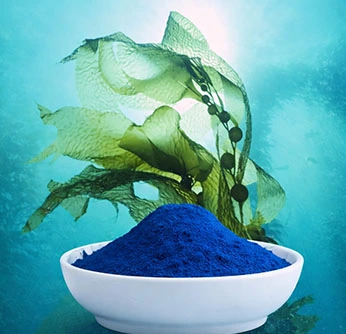
Phycocyanin is a blue phycobiliprotein that is isolated from microalgae. One of the most well-known commercial sources of phycocyanin is Spirulina or Arthrospira. Unlike many traditional synthetic colourants, it is derived from a natural source and may impart a bright blue colour to properly prepared food and beverage items.
This makes the ingredient valuable to brand owners for goods where visual appearance is an essential aspect of the customer experience. Natural blue pigments may also be used in smoothie powders, powdered drinks, certain confectionery goods, functional food ideas and other applications where the formulation and regulatory requirements are appropriate.
But the economic importance of the substance is not only in the colour. A blue pigment must be consistent in its behaviour throughout production, storage, transportation and ultimate usage. The colour may be affected by pH, temperature, light exposure, formulation makeup and processing circumstances. Reviews of research have pointed to temperature, pH and light as major variables impacting phycocyanin stability. Stability was especially favourable at roughly pH 5.5 to 6.0 and at relatively mild temperatures.
This implies a brand cannot only choose a provider because a sample is brilliant blue. The sample must be tested under circumstances similar to the final product.
From Ingredient Selection to Finished Product Performance
The crucial issue for an OEM project is not only whether Phycocyanin can be added to a recipe. The most relevant concern is if the chosen grade can offer the necessary looks and processing performance in the full formulation.
For example, a powdered beverage and a dairy-based product might set significantly distinct formulation requirements. A supplier that knows these distinctions may assist the brand in determining whether the present powder is right or if another specification, processing technique, or stabilisation strategy should be explored.
This technique also provides the brand owner with a more realistic base for product development. The project does not evaluate the ingredient as a raw material in isolation but the interaction between ingredient specifications, processing circumstances, packaging and the finished product.
What Should Brand Owners Check Before Purchasing?
A good buying choice is based on an exact technical specification. The specification must specify what the provider is really supplying and what the customer receives with each commercial batch.
Purity, Color and Analytical Specifications
A620/A280 is often employed as an indication in the assessment of phycocyanin purity. Studies on pure C-phycocyanin have produced ratios of A620/A280 greater than 4 under circumstances of high purification, illustrating why the ratio might be relevant for comparing various degrees of purity. However, the ratio should not be used as a general substitute for a comprehensive product specification.
For commercial OEM purchase, brands should additionally evaluate the reported phycocyanin content, appearance, moisture, microbiological standards, restrictions for heavy metals, and other criteria that are relevant to the intended use. A recent certificate of analysis representative of the actual manufacturing batch is preferred over a broad product specification document.
Another practical consideration is colour. That nice blue powder looks great in a sample jar, but the way the ingredient behaves in the final product cannot be predicted by sight alone. Brands should verify colour intensity after mixing, processing, and storage, particularly when the product includes acidic substances, minerals, proteins, or other chemicals that may impact the durability of the pigment.
Documentation and Regulatory Preparation
Internationally sourced ingredients need documentation as a key component. Depending on the target market and application, a supplier may be asked to supply a specification sheet, certificate of analysis, allergy information, microbiological findings, heavy metal data, origin information, production details, and necessary certification papers.
Also, the regulatory status of spirulina-derived colour additives must be examined depending on the ultimate use and destination market. In the United States, spirulina extract is expressly regulated by the FDA as a colour additive, and its authorised use is subject to the necessary regulatory rules. The FDA also notes that colour additives are regulated based on the intended application, and producers must verify their products meet the necessary criteria.
That’s why it’s best for an OEM supplier to provide regulatory paperwork that assists the brand’s compliance team in assessing the substance, rather than just labelling the product “FDA certified.” The final regulatory determination should be consistent with the actual product, its intended use, its labelling, and destination market.
Batch Consistency and Supply Capacity
A good OEM program involves more than the initial sample. A brand may accept one batch in research and then buy hundreds of kilos or several tonnes for commercial manufacturing. If the colour, purity, moisture or physical properties vary greatly from batch to batch, the ultimate product may vary as well.
Supplier assessment should thus include manufacturing capacity, quality control processes, batch testing, raw material procurement, storage conditions and lead-time management. Brands with regular production schedules may also benefit from keeping inventory at the right level, especially when demand varies rapidly.
The provider should be able to explain the distinction between normal stock items and special OEM materials. Standard items may be ready sooner; customised specs, unique packaging, or extra processing may need a lengthier research and manufacturing cycle.
How Can an OEM Phycocyanin Project Be Developed?
A successful OEM process should facilitate the transition from ingredient selection to commercial manufacture as smoothly as feasible. The precise method varies by product category, but most projects benefit from defining technical requirements before talking about large-scale manufacturing.
Start With the Brand's Product Concept
The first conversation should be on the product format, target market, desired colour, placement of ingredients, container size, volume predicted per annum, and production circumstances. This information enables the provider to have a better grasp of what sort of phycocyanin standard may be suitable.
A brand that develops a powdered drink may have different criteria than a firm that develops a ready-to-mix beverage. The provider should know whether the ingredient will be subjected to heat, acidic conditions, long-term exposure to light, or other processing variables.
This early technical discussion also helps to avoid later unneeded reformulation. If the product is anticipated to be subjected to circumstances which are unfavourable for pigment stability, they might be taken into account from the early development stage rather than after commercial production has been started.
Sample Evaluation and Formulation Development
Once the basic criteria are defined, samples may be tested in the final formulation. Here is where an OEM supplier may provide real value beyond just supplying a basic material.
The development team may investigate dispersion, colour intensity, taste and odour characteristics, processing compatibility, and storage behaviour. The formulation may need modifications to the surrounding ingredients, manufacturing conditions, packaging, or the stabilisation system in case of goods needing enhanced stability.
Since phycocyanin is sensitive to environmental conditions, formulation testing should be done based on the particular product, not a general temperature or pH statement. Published studies have demonstrated that high temperature and unfavourable pH conditions may promote deterioration, and stabilisation strategies such as appropriate carriers or encapsulation might enhance performance in specific applications.
Packaging and Private Label Support
Packaging is another key aspect of the OEM process after the formulation is decided. Phycocyanin powder should be stored under conditions that might impair the quality, for example, excess moisture, heat, and light.
The right package type will depend on order size, distribution circumstances, shelf-life needs and the brand’s retail strategy. For firms buying in bulk, big industrial packaging may be useful. Smaller sealed packaging may be more suited for completed private-label items.
A provider that can handle ingredient supply, packaging specs, labelling information, and manufacturing paperwork may simplify the communication between different stakeholders and make the project simpler to manage.
Building a More Reliable Supplier Relationship
The supplier relationship becomes increasingly important as a product moves from development into commercial production. At the sampling stage, a brand mainly needs technical responsiveness and a suitable product. At the commercial stage, it also needs predictable quality, documentation, production planning, and communication.
Factory Capability and Quality Control
When evaluating a supplier, brand owners should look beyond photographs of production facilities or general claims about advanced technology. More useful questions concern how raw materials are controlled, how batches are tested, how specifications are maintained, and how deviations are handled.
The supplier should be able to explain its quality control process in terms that procurement and technical teams can evaluate. This may include incoming raw material checks, in-process controls, finished-product testing, retained samples, batch records, and traceability.
These details provide stronger evidence of manufacturing capability than broad statements such as “world-class factory” or “leading technology.”
Direct Communication With the Manufacturer
Factory-direct cooperation can simplify communication during an OEM project. Instead of passing technical questions through several intermediaries, the brand can communicate directly with the production and quality teams responsible for the material.
This can be particularly useful when a project involves customized specifications. If the buyer needs a particular purity range, packaging configuration, color requirement, or production schedule, direct communication can help identify whether the request is technically and commercially practical.
For long-term customers, direct cooperation can also make demand forecasting easier. Production schedules can be discussed in advance, allowing the supplier to plan raw materials and manufacturing capacity around the brand's expected requirements.
Traceability and Long-Term Supply
Traceability becomes increasingly important when an ingredient moves into multiple finished products or international markets. The supplier should be able to connect the commercial batch to its production records and relevant quality documentation.
Long-term supply planning is equally important. A brand may begin with a small sample and eventually require regular commercial quantities. The supplier therefore needs enough production capacity and raw material access to support growth without creating unnecessary variation in product specifications.
This is especially important for brands that build their visual identity around a consistent blue color. If the pigment changes noticeably between batches, the finished product may also look different on the shelf.
Conclusion
OEM phycocyanin solutions can give brand owners a practical route to developing products that combine a distinctive natural blue appearance with a clear ingredient story. However, successful sourcing depends on more than color intensity or a high purity number. Brands should evaluate analytical specifications, batch consistency, processing stability, documentation, regulatory suitability, packaging, and long-term supply capacity before committing to a commercial program.
The most effective OEM relationship begins with the finished product in mind. When the supplier understands the formulation, processing environment, target market, packaging requirements, and expected production volume, the development process becomes much more focused. Samples can be tested under realistic conditions, specifications can be established before scale-up, and documentation can be prepared alongside the product rather than at the end of the project.
For brand owners, this approach also creates a more reliable path from concept to commercial production. Instead of treating Phycocyanin as a simple commodity ingredient, they can evaluate it as part of a complete supply and formulation solution, supported by appropriate testing, technical communication, and consistent manufacturing. That is ultimately what makes an OEM partnership valuable: not simply supplying a blue powder, but helping the brand develop a repeatable product that can be manufactured, documented, and supplied consistently as the business grows.
FAQ
1. What is the recommended dosage for Blue Spirulina Phycocyanin Powder in supplement formulations?
Dosage amounts depend on the use. For example, 50–500 mg daily doses are usual for dietary supplements, based on the health benefits they are meant to provide. Our technical team gives specific recipe advice based on the types of people we want to buy our products and the results we want them to have.
2. How does phycocyanin compare to other spirulina extracts in terms of antioxidant capacity?
Because it has more concentrated bioactive chemicals, blue spirulina phycocyanin is a better antioxidant than whole spirulina or chlorella products. The 98% purity standard makes sure that the formula is as strong as possible while getting rid of any unpleasant sea tastes.
3. Can you provide organic-certified Blue Spirulina Phycocyanin Powder with private label capabilities?
Yes, we follow the rules for organic certification and provide full private labeling services, such as custom packing, legal paperwork, and brand-specific formulation development to meet the needs of a wide range of markets.
4. What storage conditions are required to maintain phycocyanin powder stability?
Keep the original cases that are tightly closed and out of the way of light, moisture, and high temperatures. Under controlled conditions, the color strength and bioactive qualities stay the same for 24 months if the product is stored correctly.
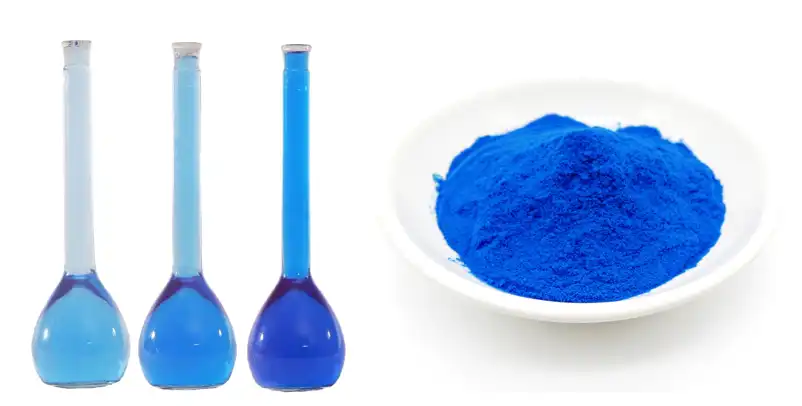
Partner with Gold Herb for Premium Blue Spirulina Phycocyanin Powder Solutions
Through our proven experience in phycocyanin extraction and purification, Gold Herb's full OEM services can turn your new product ideas into market-leading recipes. Our FDA-approved factories, global supply chain resources, and expert help from Academician Li Xiaokun's study team make Blue Spirulina Phycocyanin Powder applications of the highest quality and dependability. To get samples, talk about unique formulations, and look into cheap price options for your next product launch, email our technical experts at info@newgoldherb.com. As a reliable Blue Spirulina Phycocyanin Powder supplier, we offer complete paperwork, certification support, and shipping solutions that make the buying process easier while ensuring that the quality of the products you receive is always high.
References
1. Martinez, R.A., Thompson, J.K., & Chen, L.M. (2023). "Industrial Applications of Phycocyanin Extraction Technologies in Commercial OEM Manufacturing." Journal of Applied Biotechnology and Manufacturing, 45(3), 178-192.
2. Rodriguez-Santos, M.P., Kumar, A., & Williams, D.B. (2024). "Quality Control Standards for Blue Spirulina Phycocyanin Powder in Global Supply Chains." International Food Science and Technology Review, 31(7), 245-261.
3. Thompson, K.J., Liu, X.Y., & Anderson, R.S. (2023). "OEM Partnership Strategies for Natural Colorant Integration in Functional Food Products." Food Industry Management Quarterly, 18(4), 89-103.
4. Park, S.H., Nakamura, T., & Brown, A.C. (2024). "Regulatory Compliance Framework for Phycocyanin-Based Nutraceutical Manufacturing." Global Regulatory Affairs Journal, 12(2), 134-148.
5. Davis, M.L., Zhang, W.Q., & Johnson, P.R. (2023). "Supply Chain Optimization Strategies for Premium Plant Extract OEM Services." Biotechnology Business Development Review, 29(6), 201-216.
6. Garcia, L.A., Smith, R.T., & Kim, J.H. (2024). "Market Analysis of Blue Spirulina Applications in Private Label Product Development." Natural Products Industry Report, 41(1), 67-82.

Send Inquiry
Related Industry Knowledge
- Fisetin: Benefits, Dosage, and Safety Guide
- Best Blue Spirulina Phycocyanin Powder for Beverage Brands
- The Truth About Resveratrol: Does It Really Work?
- Urolithin A vs Spermidine: Which Works Better for Cellular Renewal?
- Fisetin vs Curcumin: Key Differences and Benefits
- Sodium Copper Chlorophyllin Powder for Oral Care Products
- How Gymnema Sylvestre Extract Powder Is Used in Weight Management R&D
- What About Coconuts, Coconut Milk, and Coconut Oil MCTs?
- Why Urolithin A Is the Next Big Ingredient in Longevity Supplements
- OEM Phycocyanin Powder Solutions for Brand Owners