
Blue Matcha Butterfly Pea Flower Powder Price Guide for Global Buyers
Mar 23, 2026
The price of blue matcha butterfly pea flower powder can vary considerably between suppliers, and comparing two quotations only by the price per kilogram can lead to the wrong purchasing decision. The final price for international purchasers depends on the shape of the product, quality of raw materials, specification of anthocyanin, processing technique, testing requirements, packaging, order quantity, shipping conditions, and destination market. The provider that is charging less per unit may not be supplying the same standard as the supplier who is charging more. One quote may be for a simple butterfly pea flower powder, and another may contain a standardized extract, further lab testing, special packaging, or a stricter specification. The first stage in the evaluation of the market, therefore, is to ensure that the items being compared are indeed equal. This article provides an overview of the critical components of the pricing of Blue Matcha Butterfly Pea Flower Powder and illustrates how procurement teams may make better supplier comparisons. There’s a lot of attention on the nuts and bolts of B2B buying processes: requirements, certificates of quality, order quantity, packaging, logistics, and vendor assessment.
What Determines the Price of Blue Matcha Butterfly Pea Flower Powder?
The price of butterfly pea flower powder is more than the price of the flower. Before coming to a final export quote, the provider has to consider sourcing of raw material, processing loss, drying, milling, quality control, packing, storage, and transportation.
Especially the product specification is vital. Buyers need to decide first if they want a basic flower powder, a concentrated extract, or a product that’s been standardized to a certain level of anthocyanins. All of these items may be defined informally as a butterfly pea powder; however, they can have quite varied manufacturing costs.
Specification is also dependent on the intended use. A beverage company may be very focused on color performance, dispersibility, particle size, and microbiological criteria, but a cosmetics maker may have distinct documentation and formulation needs. Consequently, the best appropriate product is not usually the highest specification or lowest priced product.
Raw Material Source and Processing Method
The botanical source of butterfly pea flower products is often declared as Clitoria ternatea. Quality and availability of the flowers might affect the price of the final powder. Harvest circumstances, geographical origin, drying processes, storage conditions, and raw material selection impact uniformity across batches.
Processing counts, too. To keep the appearance and powder qualities constant, the provider needs regulated conditions for drying and milling. If an extraction or concentration stage is included, the production process becomes more complicated, and the final product must be assessed against its own specification, rather than compared directly with normal flower powder.
So, for purchasers, the word “butterfly pea powder” is not enough for price comparison. The quotation must include precisely what is being delivered, i.e., botanical material, method of processing, specification, and any standardization needs.
Anthocyanin Content and Color Specification
Anthocyanins are commercially relevant since they are involved with the unique blue coloration of butterfly pea products. Buyers should therefore differentiate between a generic statement on anthocyanins and a precise analytical definition.
Whether color performance is a critical end application, procurement teams should question how the particular measurement is assessed by the supplier and whether the value is checked for each batch. The analytical approach is important since the findings obtained by various testing processes may not be directly comparable.
The visual color of butterfly pea powder might also alter depending on the environment in which the formulation is made. The pH-responsive color properties of butterfly pea anthocyanins are well known and make the ingredient a popular choice for goods where color variations are an essential aspect of the product idea. However, in practice, when buying, it is recommended to check the material in your own formulation instead of believing that a specification on paper will provide the same result in the end product.
Purity, Moisture, Particle Size, and Microbiological Specifications
The specification is more than just purity. Where required, the buying team should additionally check moisture, particle size, microbiological limitations, heavy metal requirements, and other factors relevant to the intended use.
Particle size may impact how a powder disperses and behaves in production. Depending on the liquid or dry-blend application, a finer powder may be appropriate, whereas another formulation may demand a different particle distribution. There is no mesh size that will instantly be perfect for every product.
Moisture should also be checked against the supplier’s standard and the buyer's storage needs. Buyers should not use a single moisture percentage as a universal quality standard but rather verify the actual specification, testing technique, packaging system, and suggested storage conditions.
This information is significant since two providers might quote extremely different costs while both claiming to offer “high-purity butterfly pea powder,” so you should compare the underlying specs of butterfly pea flower powder first to make a valid comparison.

Why Supplier Quotations for Butterfly Pea Flower Powder Differ?
Having elaborated on the product specification, the following stage is to investigate the reason why the supplier bids may still differ. The final offer might depend on the manufacturing location, volume of production, quality systems, packaging, order quantity, and commercial terms.
A pricing quote has to be seen as a bundle and not a single figure. The lower price may not cover certain testing or packaging needs. The higher price may include other services that are relevant to the buyer's market.
Certification and Documentation Requirements
Certification may affect the cost of delivering an ingredient, but it is contingent upon what the customer really wants. Food, cosmetics, dietary supplements, and other markets may have varied documentation demands; therefore, the same certificate may not be worth the same for various applications.
The buyer has to differentiate between factory quality systems, product certificates, market registrations, and customer-specific documents. An ISO-based management system is not a product approval, and a supplier’s registration status does not automatically guarantee that every product specification matches a buyer’s needs.
A genuine quote should describe the documentation bundle. Depending on the application, purchasers may seek a certificate of analysis, specification sheet, batch information, microbiological data, heavy metal testing, allergy information, origin paperwork, or any other documents needed by their internal quality system.
The more bespoke your documentation and testing package is, the more likely it will impact the overall estimate. Therefore, while evaluating many proposals, buyers should ask the same documentation criteria from vendors.
Order Quantity and Minimum Order Requirements
Order size is another big determinant in B2B prices. A supplier may offer you varied commercial conditions for samples, short trial orders, normal wholesale volumes, and even bigger manufacturing contracts.
With larger orders the packing, laboratory testing, factory setup, and administrative handling may be reduced per kilo. But purchasers should not believe that the greatest order guarantees the best economic outcome. Having too much inventory might contribute to storage expenses and tie up operating capital.
A better method is to compare the unit pricing with what the firm can really consume. For a new product, it may be more feasible to take a short trial order followed by a bigger contract rather than buying a huge number at once.
Buyers may also negotiate price review processes, anticipated quantities, lead periods, and batch requirements in a long-term supply agreement. These conditions might be worth more than just asking for the lowest initial quote.
Packaging and Export Requirements
Packaging is a direct contributor to delivery cost. Standard bulk packaging is generally less expensive than highly customized packaging; however, unique bag sizes, labels, multilingual markings, private-label packaging, and retail-ready forms may need extra manufacturing labor.
Export packaging should also preserve the powder during transit and storage. Acceptance of a quote will be subject to verification of packing material, net weight per unit, number of units per shipment, pallet layout where appropriate, and labelling requirements.
This is especially relevant to overseas purchasers because the cost of the powder itself is just one component of the landed cost. Cheap-looking packaging at the plant might generate downstream needs for handling or transit in the supply chain.
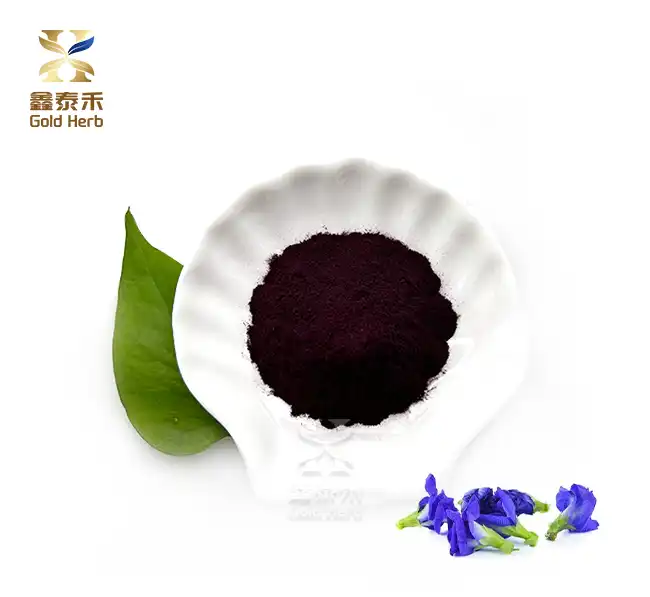
How Global Buyers Should Compare Butterfly Pea Flower Powder Prices?
A reliable comparison starts with a standardized inquiry. Sending one supplier a request for basic powder and another supplier a request for a standardized extract makes the resulting prices almost meaningless.
A better purchasing request should describe the product type, intended application, required specification, order quantity, packaging preference, destination, documentation requirements, and expected delivery schedule. Suppliers can then quote against the same commercial conditions.
Compare the Specification Before Comparing the Price
The first question should be whether the products are equivalent. Buyers should compare the botanical source, product form, processing method, anthocyanin specification if applicable, particle size, moisture, microbiological requirements, and other parameters that matter to the formulation, including those specified for butterfly pea flower powder.
This approach prevents a common procurement mistake: selecting a cheaper product that later requires additional processing, blending, testing, or quality adjustment. The apparent saving at the quotation stage may disappear once the product reaches the manufacturing site.
For this reason, the lowest unit price should not automatically be treated as the lowest total procurement cost.
Review the Supplier's Quality Control Process
Supplier evaluation should extend beyond a certificate displayed on a website. Buyers should understand how incoming raw materials are checked, how batches are processed, how finished products are tested, and how batch records are maintained.
A supplier that can provide consistent batch documentation gives procurement and quality teams a clearer basis for approving repeat purchases. Buyers should also ask whether the same specification can be maintained for future batches, particularly when the ingredient will be used in a product with a fixed color or formulation requirement.
Sample evaluation is especially useful before a larger order. A representative sample can be tested for appearance, solubility or dispersibility where relevant, color behavior, moisture, microbiological parameters, and other application-specific requirements.
Evaluate the Landed Cost Rather Than the Factory Price
For global buyers, the factory quotation is only the starting point. The final landed cost can include packaging, inland transportation, freight, insurance where applicable, customs-related charges, import duties, broker fees, and local delivery.
Shipping terms should therefore be clearly stated in the quotation. Comparing an EXW price with a CIF or DDP-style offer without adjusting for the different services included can produce a misleading result.
Currency should also be considered. If the buyer's purchasing budget is in a different currency from the supplier's quotation, exchange-rate movements can affect the final cost. Longer-term agreements should clearly state the currency and the conditions under which prices may be reviewed.
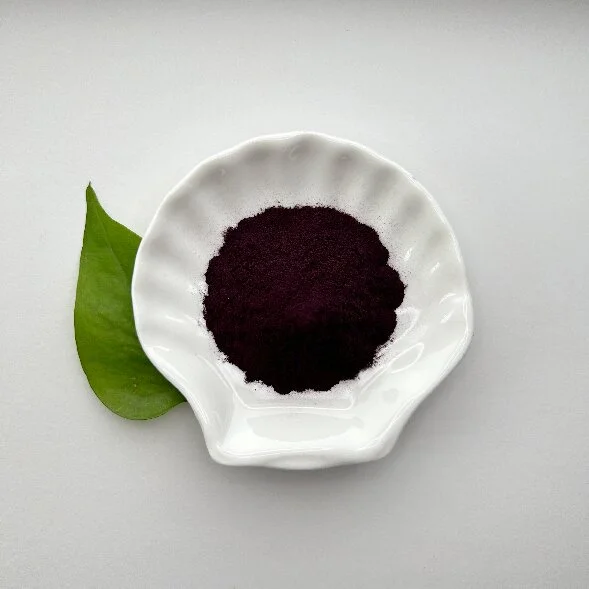
How to Select a Supplier for Long-Term Supply?
Price is important, but consistency becomes increasingly important once an ingredient enters regular production. A supplier that offers an attractive first quotation but cannot maintain the agreed specification may create more cost than a slightly higher-priced supplier with reliable batch performance.
Production Capacity and Supply Continuity
Buyers should understand whether the supplier can support both trial quantities and commercial-scale orders. Production capacity, raw material sourcing, inventory practices, and lead time all influence supply continuity.
For businesses launching a new product, this point deserves particular attention. Forecasts may change quickly after commercialization, and a supplier should be able to explain how additional demand would be handled without changing the agreed product specification.
It is also useful to ask how the supplier manages seasonal raw material availability. Agricultural ingredients can be influenced by harvest cycles and local growing conditions, so a realistic supply plan is more useful than a general promise of continuous availability.
Technical Communication and Sample Support
A capable supplier should be able to answer technical questions clearly. If a buyer asks about particle size, color specification, moisture, analytical testing, packaging, or storage conditions, the supplier should provide information that can be reviewed by purchasing and quality teams.
Sample support is equally valuable. A sample gives the buyer an opportunity to evaluate the material in the actual formulation before committing to commercial volume. When the application depends on color performance, dispersion, or interaction with other ingredients, this practical evaluation is often more informative than a specification sheet alone.
A supplier that communicates clearly during the sample stage is also more likely to be easier to work with when specifications, forecasts, or documentation requirements change.
Conclusion
Buying Blue Matcha butterfly pea flower powder at a competitive price requires more than comparing the numbers on several supplier quotations. The product form, raw material quality, anthocyanin specification, processing method, testing requirements, packaging, order quantity, and logistics all influence the final purchasing cost.
For global B2B buyers, the most reliable approach is to define the required specification first and then ask suppliers to quote against the same conditions. Samples should be evaluated before large-scale purchasing, while quality documentation, batch consistency, production capacity, lead time, and export terms should be reviewed alongside the unit price.
A supplier offering a slightly higher quotation may provide better overall value if the specification is consistent, documentation is complete, communication is efficient, and the product performs reliably in the buyer's application. By evaluating the full procurement cost rather than focusing only on the lowest price per kilogram, purchasing teams can make more informed decisions and establish supply relationships that are easier to maintain as demand grows.
FAQ
1. What is the typical caffeine content in butterfly pea flower powder?
Unlike traditional matcha goods made from Camellia sinensis, Blue Matcha Butterfly Pea Flower Powder does not contain any caffeine at all. Because of this, it can be used in evening drinks and products for people who are sensitive to caffeine while still keeping the natural extract's good looks and health benefits.
2. How can buyers be sure that a product is real and of good quality?
To make sure the quality is good, you need full records of analysis that include tests for purity, heavy metals, and microbiology. Reliable suppliers give third-party lab results that confirm the specs. Some other ways to check are to ask for samples to be tested by a third party and to do site exams for important suppliers.
3. What are the most affordable ways to ship items to other countries?
For big shipments, sea freight is usually the most cost-effective choice, saving 60–80% on shipping costs compared to air freight. For urgent needs or smaller amounts, however, air freight offers faster service. For medium-volume needs, consolidation services that combine multiple orders can make shipping more efficient.
4. How should butterfly pea flower powder be kept so that it stays fresh?
For the best keeping, packages should be tightly sealed and kept away from light in cool, dry places. Controlling the temperature below 25°C and the relative humidity below 60% keeps sensitive anthocyanin chemicals from breaking down. If you store things the right way, they will last up to 24 to 36 months and still keep their color strength and usefulness.
Partner with Gold Herb for Premium Blue Matcha Butterfly Pea Flower Powder Supply
Gold Herb offers great value with our complete Blue Matcha Butterfly Pea Flower Powder options, which are backed by cutting-edge extraction technology and strict quality control systems. Our 99% purity promise, full certification package, and adjustable formulation services meet the needs of a wide range of industries. As a reliable provider of blue matcha butterfly pea flower powder with global transportation and U.S. warehouses, we can guarantee fast delivery and stable supply chains to help your business grow. Get in touch with info@newgoldherb.com right away to get free samples, customized prices, and detailed information that fits your needs.
References
1. Johnson, M.A., et al. "Anthocyanin Stability and Pricing Trends in Natural Food Colorants: A Global Market Analysis." Journal of Food Science and Technology, 2023.
2. Chen, L.K. "Supply Chain Optimization for Southeast Asian Botanical Extracts: Cost Factors and Quality Considerations." International Journal of Agricultural Economics, 2023.
3. Rodriguez, S.P., et al. "Regulatory Compliance and Certification Requirements for Natural Ingredient Imports: A Comprehensive Guide for Global Buyers." Food and Drug Administration Quarterly Review, 2023.
4. Thompson, R.J. "Market Dynamics and Price Volatility in the Natural Ingredients Sector: Focus on Clitoria ternatea derivatives. "Global Commodity Markets Report, 2023.
5. Wang, H.Y., et al. "Quality Assessment and Standardization Protocols for Butterfly Pea Flower Extracts in Commercial Applications." Analytical Chemistry in Food Safety, 2023.
6. Miller, K.D. "Strategic Procurement Best Practices for Natural Botanical Ingredients: Risk Management and Cost Optimization." Supply Chain Management International, 2023.

Send Inquiry
Related Industry Knowledge
- Top Benefits of Ashwagandha Extract for Anxiety, Sleep & Mood
- What Is Sodium Copper Chlorophyllin Powder Used For?
- Why 5-Hydroxytryptophan Is Trending for Sleep and Stress Relief
- Fisetin vs Curcumin: Key Differences and Benefits
- Sodium Copper Chlorophyllin Powder for Oral Care Products
- Does saw palmetto actually block DHT?
- Reliable 5-HTP Manufacturer for Sleep & Mood Supplements
- Bulk Fisetin Powder for Sale | High Purity Fisetin Raw Material Supplier
- Quality Control Standards for Ginkgo Biloba Leaf Extract Powder
- Boswellia Extract Manufacturing Process Explained