
Best Dihydromyricetin powder Powder for Functional Food Manufacturers
Apr 01, 2026
For functional food manufacturers, choosing the right dihydromyricetin powder is not simply a matter of selecting the highest assay on a specification sheet. The source of the botanical material, the process of extraction and purification, the analytical methodology utilised, batch-to-batch consistency, solubility, documentation and suitability for the final product all contribute to the ability to scale up an ingredient effectively for commercial use. Dihydromyricetin (DHM, ampelopsin) is a flavonoid compound mostly found in Ampelopsis grossedentata, a plant used as a traditional medicine in southern China. The DHMs have been explored for antioxidant, anti-inflammatory, metabolic, and alcohol-related effects; however, the quality of evidence varies substantially across laboratory, animal, and human investigations. This is a big difference for purchasers. The botanical ingredient may have some potential biological activity. Not all of the mentioned benefits have been clinically proven in people. The last thorough review of DHM and alcohol-related outcomes found considerable preclinical but little clinical evidence for isolated DHM. Powder headline purity is just as much a part of the solution as specification control and intelligent product advertising.
What Makes Dihydromyricetin Powder Suitable for Functional Food Manufacturing?
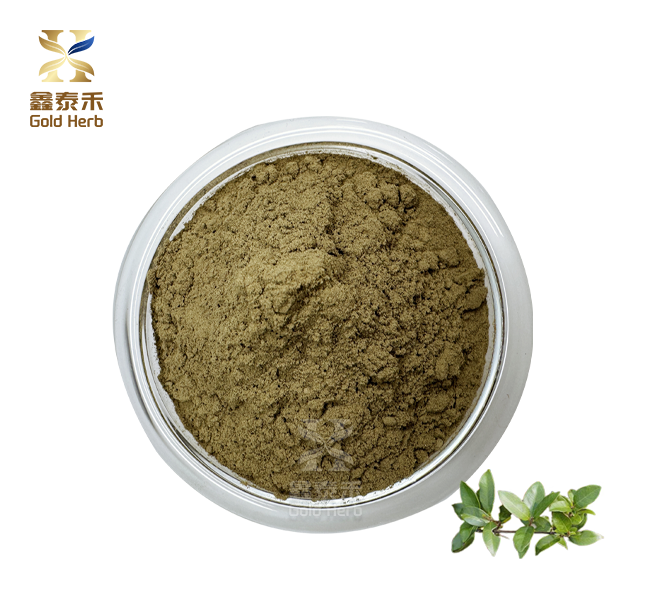
Dihydromyricetin powder is often produced from the stems and leaves of Ampelopsis grossedentata, also called vine tea. The plant contains various flavonoids and phenolic chemicals, dihydromyricetin being one of the main bioactive ingredients. Reviews have demonstrated the existence of compounds like myricetin, quercetin, rutin, phenolic acids and other phytochemicals in the plant. This demonstrates the great variability in the final product, depending on whether a manufacturer is purchasing a whole botanical extract or a highly purified DHM ingredient.
This should be specified throughout the tender process. A standardised botanical extract may include a larger range of compounds from the plant, but a high-assay DHM powder is the best choice when the formulation calls for a certain quantity of the intended constituent. Both have benefits and downsides for a specific application. The product concept, dosing form, sensory demands, analytical specification and regulatory strategy lead the choice.
Understanding Assay, Botanical Source, and Extract Type
The first question manufacturers should ask is what the claimed percentage really represents. If a product is advertised as 98% dihydromyricetin, it should be apparent how that was analytically defined and tested. Ideally this should be supported by batch-specific HPLC documentation. Published extraction experiments suggest that it is theoretically possible to purify DHM to about 98% using the correct procedures, meaning that high-assay material is theoretically possible.
In this sense, the botanical identification is also very important, since the amount of DHM may vary significantly depending on plant material, growth conditions, harvest stage, extraction method and purification process. Studies have shown that the phytochemical makeup of Ampelopsis grossedentata is very variable; thus, it is not wise for buyers to anticipate that each vine tea extract will have the same quantity of DHM.
So the most relevant requirement for commercial manufacture is not merely “high purity”. It is a standard which covers the test procedure, botanical identification, extraction qualities, appearance, moisture, microbiological limits, heavy metal limits and other applicable quality criteria.
Why Solubility and Stability Matter in Product Development?
High assay doesn’t mean simple formulation. However, DHM is relatively poorly soluble in water. Published research identifies solubility, stability, metabolism and oral bioavailability as major challenges for practical usage of DHM.
That’s particularly true for beverage producers. The formulation of a powder for a translucent or light-coloured ready-to-drink beverage may differ from that needed for an ingredient used in capsules, sachets, gummies or powdered functional blends. The ultimate product is down to dispersion, sedimentation, colour, taste and compatibility with acids, sweeteners, minerals and other botanical constituents.
Manufacturers need to look at the actual dihydromyricetin ingredient in the recipe and not simply a supplier from a catalogue specification. A little laboratory test will show if the powder is spread well enough, whether the flavour is acceptable and whether the final formula is still suitable after processing and storage.

How Should Manufacturers Evaluate Dihydromyricetin Quality?
The buying choice should be dependable and relate analytical tests to production needs. The idea is to get a material that is constant from batch to batch and can be backed up by paperwork when the final product goes into commercial production.
HPLC Testing and Batch Documentation
HPLC is a useful instrument in validating the concentration of dihydromyricetin in a standardised substance. A good provider should be able to give a certificate of analysis for the batch and explain how the assay is determined. For bigger commercial transactions, purchasers may additionally seek chromatographic data, testing standards, sample retention policies, and information on the laboratory performing quality release.
A good COA should not be seen as a formality. It gives proof that the material supplied from the manufacturer is in accordance with the agreed specification. By testing the same standard on a consistent basis across numerous manufacturing lots, the producer has a better foundation for control and uniformity of end product dosage.
Other characteristics of the test should be chosen according to the target market and intended use. The evaluation of heavy metals, microbiological limits, moisture, residual solvents, pesticides and other pollutants may be necessary depending on the source material, extraction procedure, destination market and customer specification.
Consistency Is More Valuable Than a Single High Assay
A commercial product maker requires consistent raw material, not a single batch that is very powerful. When one shipment is 98% DHM and another is far less than the intended standard, it is much harder to formulate and regulate the completed product.
This is why procurement teams should look at numerous batches when feasible. Consistent test findings, consistent physical properties, stable packaging, and dependable documentation are greater proof of manufacturing control than a single good laboratory result.
The same is true of appearance and sensory qualities. A powder might fulfil its assay standard but still produce difficulties in a final beverage due to colour, taste, dispersion or sedimentation. You should analyse these practical features before you begin to buy on a significant basis.

How Can Dihydromyricetin Powder Be Used in Functional Food Formulation?
The best form of dihydromyricetin depends on the ultimate product you are making. The regulation of dose is generally simple with capsules and tablets; however, beverages and powdered drinks need more attention to dispersion and sensory qualities. Functional meals, including many active ingredients, could also need compatibility testing since the behaviour of a single plant may not always be predictable from its own specification.
Beverage, Powder, Capsule, and Functional Food Applications
For powders the quantity of DHM applied is generally set by the manufacturer and has a relatively low influence on processing. However, the powder still needs to be tested for flowability, particle properties, moisture, taste and compatibility with the other ingredients.
Beverage applications are more challenging since the ingredient has to be well dispersed in the liquid system. Depending on the product design, producers could look at alternative grades or formulation methods to optimise dispersion and eliminate apparent sediment. "Formulation testing should help to find the right technique and not assume that one processing method will work for every beverage system.
Capsules and pills are also handy for the fact that the active component is provided in a concentrated solid form. For these goods, the main focus should be on powder flow, compression behaviour, excipient compatibility and assay consistency. In the case of improved delivery systems, the technical data on the individual formulation has to be supplied by the provider rather than general claims of greater bioavailability.
Setting a Sensible Inclusion Level
There is no general dihydroxymyricetin dosage that can be applied directly to all functional foods. The amount of inclusion suited to the ingredient specification, completed product format, intended use, target market, and supporting safety and regulatory evaluation.
The original article’s blanket suggestion of 100 to 500 mg per serving is therefore too wide to be used as a uniform production guideline. Human studies are in their infancy, and various investigations have utilised varied formulations and end criteria. A 2026 randomised clinical trial involved a supplement with 300 mg/day of DHM in adults with metabolic dysfunction-associated steatotic liver disease, but the formulation also included vitamins C and E and choline, so the result should not automatically be attributed to isolated DHM.
Manufacturers would be more defensible if they set an inclusion level from the particular product idea and then validate the final product against relevant safety, labelling and regulatory standards.

Conclusion
Dihydromyricetin powder can be an interesting botanical ingredient for functional food manufacturers, particularly when the formulation requires a standardized source of DHM and the product concept is built around antioxidant or liver-related functional positioning. Scientific research provides a substantial basis for investigating these properties, but manufacturers should distinguish preclinical findings from established human evidence and avoid treating emerging research as proof of therapeutic efficacy.
The best dihydromyricetin powder is therefore not necessarily the one with the largest number printed on the specification sheet. A stronger purchasing decision considers verified assay, botanical identity, analytical testing, batch consistency, solubility, sensory characteristics, contaminant control, documentation, and suitability for the intended formulation. These factors become even more important when a product is manufactured at scale and sold across different regulatory markets.
For manufacturers evaluating Gold Herb as a supplier, the most practical next step is to request the relevant specification and batch documentation, review the analytical method, and test a sample in the intended formulation. This provides a more reliable basis for selecting a dihydromyricetin grade than comparing purity or price alone. It also creates a clearer path from ingredient qualification to pilot production and, ultimately, repeat commercial supply.
FAQ
1. What should functional food manufacturers look for in dihydromyricetin powder?
Manufacturers should look beyond the stated purity and review the DHM assay method, botanical source, batch consistency, COA, contaminant testing, physical characteristics, packaging, storage conditions, and regulatory documentation required for the destination market. For beverage and powdered formulations, solubility and sensory properties should also be evaluated during product development.
2. Is 98% dihydroxy myricetin powder always the best option?
Not necessarily. A 98% specification can be useful when a formulation requires a highly standardized DHM ingredient, but the highest assay does not automatically provide the best performance in every finished product. Beverage manufacturers may place greater importance on dispersion and sensory characteristics, while capsule or tablet manufacturers may prioritize assay uniformity and powder handling.
3. Does Dihydromyricetin have clinically proven hangover benefits?
The current evidence does not support presenting isolated DHM as a clinically established hangover treatment. Research has produced promising laboratory and animal findings, but a 2026 systematic review found that clinical evidence remains limited and that the available clinical studies used Hovenia dulcis extracts rather than isolated DHM.
4. Can dihydromyricetin be used in functional beverages?
It can be considered for beverage development, but formulation testing is important because DHM has limited water solubility and its physical behavior can vary with the beverage system. Manufacturers should evaluate dispersion, sedimentation, taste, color, processing conditions, and storage stability before commercial production.
Partner with Gold Herb for Dihydromyricetin Supply
Gold Herb provides standardized dihydromyricetin powder for functional food manufacturers looking for a consistent botanical raw material supported by quality documentation and technical communication. Its available specifications can reach 98% DHM, while customized requirements can be discussed according to the formulation, dosage format, quality system, and target market.
For a new product, buyers can start by requesting a sample and specification, reviewing the relevant COA and analytical information, and discussing application requirements with the technical team. This approach allows manufacturers to evaluate the actual ingredient before committing to bulk purchasing and helps establish a specification that can be maintained throughout commercial production.
For bulk dihydromyricetin inquiries, formulation discussions, or supplier qualification, contact Gold Herb at info@newgoldherb.com to discuss your required specification, application, quantity, and target market.
References
1. Zhang, L., Chen, J., & Wang, H. (2019). This article talks about dihydromyricetin and how it works at the molecular level. No. 123, pages 354–365, Food and Chemical Toxicology.
2. Liu, P., Yang, B., & Kallio, H. (2014). What are flavonoids and other phenolic compounds in blackcurrant (Ribes nigrum L.), and how do they work as antioxidants? No. 62(36), 8998–9007, Journal of Agricultural and Food Chemistry.
3. Chen, S., Zhao, X., Ran, L., et al. Dihydromyricetin helps the body break down glucose and lipids better and reduces inflammation in people with nonalcoholic fatty liver disease. UK's 172(22) British Journal of Pharmacology, pp. 5403-5413.
4. Wang, M., Zhao, J., Zhang, N., & Chen, J. (2016). Potassium oxonate can cause high uric acid levels and kidney damage. Astilbin can help by controlling the oxidative stress and inflammation response in mice. 83: 975–988 in Biomedicine & Pharmacotherapy.
5. Hou, X., Tong, Q., Wang, W., et al. A flavonoid from Ampelopsis grossedentata called dihydromyricetin can reduce inflammation by stopping the activation of NF-κB and MAPK signaling pathways. It's in the Journal of Natural Products (78(7), 1689–1696).
6. It was written by Shen, Y., Lindemeyer, A. K., Gonzalez, C., et al. The new drug dihydromyricetin is used to treat alcoholism. 32(1), 390–401 in the Journal of Neuroscience.

Send Inquiry
Related Industry Knowledge
- Tongkat Ali vs Fenugreek: Which Is Better for Testosterone?
- Gardenia Blue vs Butterfly Pea: Which Blue Colorant for Asia?
- Urolithin A Ingredient for Anti-Aging & Muscle Health Products
- Centella Asiatica vs Hyaluronic Acid: Which Is Better for Skin?
- Fisetin vs Curcumin: Comparing Natural Senolytic Compounds
- 5-Hydroxytryptophan Benefits for Sleep, Mood, and Stress Relief Explained
- Berberine hydrochloride Powder: How To Take & What It Does?
- Why B2B Partners Choose Our Fisetin: Premium Fisetin, Professional Service, and Sustainable Value
- Fisetin for Anti-Aging and Brain Health: A Rising Nutraceutical Ingredient
- GMP Sodium Copper Chlorophyllin Powder Manufacturing