
What Is Blue Matcha Butterfly Pea Flower Powder Used For in Food R&D?
Mar 26, 2026
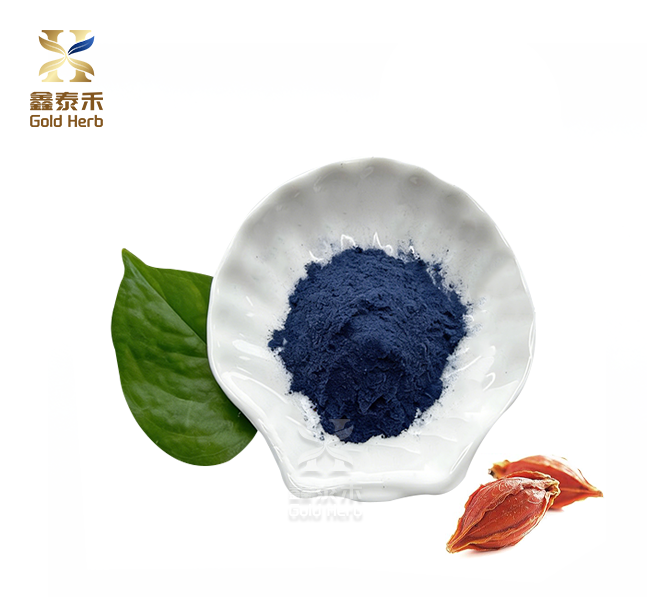
Blue Matcha Butterfly Pea Flower Powder is attracting attention in food research and development because it combines a naturally blue appearance with pH-responsive color behavior. The ingredient is derived from Clitoria ternatea L., commonly known as butterfly pea or blue pea, a flowering plant traditionally used in foods and beverages in Southeast Asia. Its blue color is associated with polyacylated anthocyanins known as ternatins, which give the flower extract a distinctive color profile and make it an interesting candidate for natural food coloring applications. For food developers, the value of butterfly pea flower is not simply that it produces a blue color. It is pH sensitive and may thus be used by formulators to build products where the visual appearance changes with pH. It is also of botanical origin and can therefore be included in formulations where organically sourced coloring additives are sought. At the same time, the performance depends on the formulation conditions, processing temperature, light exposure, storage, and composition of the manufactured product. The understanding of all these issues is necessary before the transfer from laboratory research to commercial manufacture.
What Makes Blue Matcha Butterfly Pea Flower Powder Different?
Botanical Source and Pigment Characteristics
Blue Matcha Butterfly Pea Flower Powder is prepared from the blooms of the Clitoria ternatea L., a member of the Fabaceae family. Commercially marketed “blue matcha” is often used, although it is not the same as traditional matcha from Camellia sinensis. Anthocyanin colors are found in the butterfly pea bloom, whereas green tea matcha is tinted by chlorophyll.
The butterfly pea blossom’s characteristic blue hue is primarily owing to the presence of ternatins, a kind of polyacylated anthocyanins derived from delphinidin glycosides. These pigments are of great importance for food R&D because their molecular architecture is sensitive to changes in the surrounding environment. A number of ternatin structures have been identified from Clitoria ternatea, and their characteristics are responsible for the rich blue hue of the aqueous extracts.
What do ingredient buyers worry about? As “butterfly pea powder,” “butterfly pea extract” and a concentrated anthocyanin component may differ in composition and performance characteristics. "A whole-flower powder could include naturally occurring carbohydrates, proteins, fiber, and other plant elements, whereas an extract can be processed to concentrate the color-bearing chemicals. Thus, the product specifications should be examined, and it should not be assumed that all butterfly pea components are of the same color intensity or anthocyanin content.
Why the Color Changes With pH?
One of the most valuable properties of the pigments of the butterfly pea flower is their pH sensitivity. The pH of the surrounding solution may influence the molecular arrangement of anthocyanins, and this can lead to apparent differences in color. Studies on anthocyanins of Clitoria ternatea have shown that the red colors are obtained in very acidic circumstances, violet to blue colors under moderately acidic conditions, lighter blue under near neutral conditions, and greenish colors under alkaline conditions.
This kind of conduct gives food producers a wider choice of formulation possibilities than a one-off set of blue pigment. It’s a drink created from butterfly pea flower extract, which is blue initially but may shift to violet or pink when an acidic ingredient, such as citrus juice, is added to it. The precise shade is determined by initial pH, final pH, pigment content, additional ingredients, and processing conditions. Commercial preparations require laboratory tests.
You might also work this ph response into the product experience. Developers are able to employ the controlled color changes not just as a cosmetic aspect but also to provide teas, beverages, desserts, and other things with a visually more interesting presentation.

How Food R&D Teams Use Butterfly Pea Flower Ingredients?
Natural Blue Coloring for Beverages and Desserts
Natural blue coloring is the easiest application. Butterfly pea flower anthocyanins have been explored as possible natural blue food colorants since naturally occurring blue pigments are scarce compared to red, yellow, and orange plant pigments. Their behavior in acid environments is of particular importance for beverage development.
Food producers are able to explore butterfly pea flower ingredients in tea beverages, fruit-based drinks, flavored waters, desserts, confectionery items, dairy applications, and other products where a blue, violet, or pH-sensitive visual impact is desired. The correct application relies on the regulatory status of the individual ingredient and the circumstances of the formulation in the target market.
The ingredient may also be tested in pastry and dessert creation if a plant-derived color is sought. But it is not to be anticipated that the pigment would be unaltered throughout the baking process. The stability of anthocyanins is affected by temperature, pH, oxygen, light, and other components of the food matrix. Research has shown that butterfly pea anthocyanins may exhibit strong thermal stability under specified settings, but stability declines under other temperature and storage conditions.
Functional Beverage and Tea Development
Blue Matcha Butterfly Pea Flower Powder is another good option for caffeine-free beverage creations. Since the butterfly pea blossom isn’t a tea leaf, it doesn’t contain the natural caffeine present in regular green tea matcha. This is good for developers looking for a tea-like visual experience, but without the important botanical aspect of Camellia sinensis.
But being caffeine-free doesn’t necessarily have to be sold as a health benefit. “The more defensible R&D advantage is flexibility of formulation.” Developers are free to combine butterfly pea flower with fruit tastes, botanical extracts, herbs, or other beverage ingredients and then see how those elements affect color, taste, sedimentation, clarity, and shelf stability.
This may be of particular value in commodities where visual uniqueness is crucial. A blue botanical drink might be visually distinct from green tea, fruit drinks, or brightly colored sports beverages. The R&D aim is to determine if the color remains attractive after the pasteurization, filling, storage, and exposure to the desired package environment.
pH-Responsive Product Concepts
Butterfly pea flower’s pH responsiveness gives an opportunity for interactive food and beverage applications. For instance, the addition of drinks with citrus elements may affect the color of butterfly pea anthocyanins due to their acidic parts. The same applies to layered drinks, powdered drink mixes, dessert sauces, jellies, and other products for which controlled acidity is a component.
This implies that for developers pH might be seen as a formulation variable rather than a QC measurement. You may formulate a product to a goal color at a certain pH and then test out how the color behaves as you add in additional ingredients.
This method likewise calls for prudence. The final look may be affected by sugars, minerals, proteins, acids, processing conditions, and other plant constituents; therefore, the color response is not always totally predicted. So a commercial product that works requires more than a basic pH test. The whole food matrix should be tested by developers under realistic processing and storage settings.

What Formulation Factors Affect Performance?
pH, Heat, and Light Exposure
The performance of the anthocyanins of butterfly pea flower has a tight relation with processing conditions. Light exposure may also make colours less stable, and heat can speed up pigment breakdown. An evaluation of anthocyanins in Clitoria ternatea indicated the pigments had acceptable thermal and storage stability under chosen settings but were less photostable, stressing the significance of managing light exposure during product development and storage.
This implies that assertions like “heat stable” must always be qualified. A better way is to find out what the real processing profile is for the product. For example, a beverage to be pasteurised should be evaluated at the pH and processing temperature to be used, followed by accelerated and real-time storage testing. A distinct assessment is needed for baked products, since the pigment is exposed to greater temperatures and a more complicated food matrix.
Packaging is also key. Light-sensitive products might have further stability issues with transparent packaging. Shelf-life studies may include developers comparing opaque or light-protective packaging with normal packing, rather than presuming that the pigment would stay constant throughout storage.
Concentration and Colour Strength
There is no single dose that may be administered to the food product. The needed quantity is a function of the pigment concentration in the ingredient, the desired colour, the food matrix, the pH to be achieved, the processing circumstances, and the regulatory requirements for the final product.
Because of this, a supplier’s COA and product specification are more valuable than a generic dose declaration. Food developers need to be aware of the appropriate quality characteristics for the particular batch, such as identification, moisture, microbiological findings, and heavy metals if applicable, along with a sufficient measurement of colour or pigment content where available.
Then small-scale experiments should be undertaken to determine the minimal effective amount for the application desired. Adding more powder doesn’t always mean a better result. Excessive addition of ingredients might affect flavour, texture, sedimentation, or the look of the completed item.
Interaction With Other Ingredients
Pigments may behave somewhat differently in food matrices. Acids change the colour, and minerals and other chemicals may react with the anthocyanins. Proteins, sugars, emulsifiers, preservatives and botanical extracts may also impact clarity and perception of colour depending on the composition.
That’s why a colour assessment in water doesn’t always tell you what a completed beverage or dessert will seem like in the end. A realistic R&D procedure must evaluate the ingredient in the final formulation and not test the powder as an ingredient in isolation.
The same is true for solubility and dispersion. A fine powder may disperse easily in one formulation but sediment or haze in another. Therefore, in product trials, developers should test mixing order, hydration duration, particle size, agitation, filtration and storage characteristics.

Conclusion
Blue Matcha Butterfly Pea Flower Powder gives food R&D teams a compelling mix of natural blue hue, pH-responsive visual attributes and botanical positioning. The unique pigments, particularly the ternatin-type anthocyanins contained in Clitoria ternatea, have been studied for their potential as natural food colourants and their behaviour under different pH, temperature and storage conditions.
The most practical applications are not just based on the idea of butterfly pea flower being “natural” or "healthy". “The real value is in what the formulators can do with its colour behaviour and how well that behaviour fits a particular meal matrix.” Beverages, teas, desserts, confectionary and other visually focused items may all be analysed as long as the ingredient is tested under the right manufacturing and storage conditions.
In the case of commercial development, buyers need to be extremely careful about ingredient identity, pigment or colour specifications, batch consistency, COA documentation, processing history, packaging, shelf life and destination market regulations. The FDA regulations now permit butterfly pea flower extract to be used as a food colour additive in select applications. Regulatory applicability for the precise substance and function has yet to be confirmed.
Blue Matcha Butterfly Pea Flower Powder should be seen by suppliers and food producers as an ingredient in formulations that need scientific confirmation, rather than a natural colourant that can be used in all applications. The pH response, processing tolerance, packaging requirements and quality criteria of butterfly pea blossom might be a useful ingredient for making distinctive food and beverage products if well understood.
FAQ
1. Is butterfly pea flower powder safe for food applications?
GRAS status for food usage of Clitoria ternatea L. butterfly pea flower powder was provided by the FDA. The ingredient is certified to international food safety standards, including ISO9001, HACCP, HALAL and Kosher, and therefore is suitable for a broad variety of market sectors and consumer expectations.
2. How does the colour-changing mechanism work scientifically?
The change of colour is due to the anthocyanin molecules (especially the ternatins) reacting to changes in the pH of the environment surrounding the molecule. At neutral pH (7.0) the molecules reflect blue wavelengths. Under acidic circumstances (pH 4.0-5.0), the structure is modified and the reflection is moved to purple and pink wavelengths, producing the spectacular visual transition.
3. What certifications are essential for food-grade butterfly pea flower powder?
Some of the important certifications include FDA approval for use in food, ISO9001 quality management certification, HACCP food safety certification and any organic certification, if applicable. Depending on the target market and the client demographics to be targeted, additional certifications like HALAL and Kosher may be required.
Partner with Gold Herb for Premium Blue Matcha Butterfly Pea Flower Powder Supply
Gold Herb stands ready to support your food R&D initiatives with our premium butterfly pea flower powder, backed by comprehensive technical expertise and reliable supply chain capabilities. Our 99% purity product meets the highest industry standards with complete certification portfolios, including FDA, ISO9001, HACCP, HALAL, and Kosher approvals. As a trusted Blue Matcha Butterfly Pea Flower Powder supplier, we maintain extensive inventory levels, enabling 24-hour shipment for standard specifications, while our customisation services accommodate unique formulation requirements in 7-15 business days. Our partnership with leading research institutions ensures cutting-edge technical support throughout your development process. Contact our team at info@newgoldherb.com to request samples, discuss bulk pricing options, or explore customised solutions tailored to your specific application needs.
References
1. Zhang, L., & Wang, H. (2022). Anthocyanin Stability and Colour-Changing Properties of Clitoria ternatea Extracts in Food Applications. Journal of Food Science and Technology, 45(3), 128-142.
2. Martinez, R., & Chen, K. (2023). Natural Food Colourants in Modern Product Development: Performance Analysis of Plant-Based Alternatives. International Food Research Journal, 38(7), 234-251.
3. Thompson, S., Davis, M., & Rodriguez, A. (2021). pH-Sensitive Natural Pigments: Applications and Stability in Beverage Formulations. Food Chemistry and Engineering, 29(4), 89-104.
4. Kumar, P., & Williams, J. (2023). Functional Properties of Butterfly Pea Flower Extracts in Commercial Food Production. Applied Food Science Reviews, 52(12), 167-183.
5. Anderson, C., Lee, Y., & Brown, D. (2022). Heat Stability Comparison of Natural Blue Colourants in Bakery Applications. Food Processing Technology, 41(8), 312-328.
6. Johnson, E., & Patel, N. (2024). Regulatory Compliance and Safety Assessment of Clitoria ternatea-Based Food Ingredients. Food Safety and Quality Management, 33(2), 45-61.

Send Inquiry
Related Industry Knowledge
- What Is Fenugreek? Here Are Its 7 Potential Health Benefits
- What Is Fisetin Powder? Anti-Aging Research Applications Explained
- GMP Red Beet Powder for Nutraceutical Manufacturing
- The Hidden Power of Urolithin A for Cellular Renewal
- Why Urolithin A Is the Future of Anti-Aging Science
- Ergothioneine vs CoQ10: Which Supports Cellular Energy Better?
- Urolithin A Benefits for Mitochondrial Health and Longevity
- How Ergothioneine Supports Cellular Health and Anti-Aging
- Ergothioneine Powder: A Premium Antioxidant for Cellular Protection and Anti-Aging Solutions
- OEM Ginkgo Biloba Leaf Extract Powder Solutions for Brand Owners