
OEM Gardenia Blue Color Solutions for Food Brands
Mar 13, 2026
For food brands looking to develop a natural blue color system, Gardenia Blue offers an interesting option for products where color appearance is an important part of the final formulation. Derived from Gardenia jasminoides Ellis, Gardenia Blue is used as a natural food colorant and can provide blue to blue-purple shades depending on the product specification and formulation environment. Its relatively strong performance under appropriate processing conditions has made it relevant to applications ranging from confectionery to selected beverage and dairy systems. For an OEM project, however, purchasing Gardenia Blue is not simply a matter of selecting a powder and adding it to a formula. The same colorant can behave differently depending on pH, processing temperature, light exposure, ingredients, dosage, and storage conditions. This is why food brands often benefit from working with an OEM or ingredient supplier that can provide application support alongside a defined product specification. A well-structured OEM program can connect raw material selection, laboratory testing, sample development, documentation, and commercial supply into one process.
Why Gardenia Blue Is Becoming Relevant to Food Brand Development
Blue is one of the more challenging shades to achieve with naturally derived food colors, particularly when a product needs both visual consistency and a recognizable ingredient story. Gardenia Blue is therefore of interest to brands that want to explore alternatives to conventional synthetic blue colorants while maintaining a commercially useful color profile.
Gardenia Blue is associated with pigments produced from compounds found in the fruit of Gardenia jasminoides. Scientific research has examined gardenia-derived blue pigments in relation to heat, light, and pH stability, with results showing that performance depends on the specific pigment system and processing conditions rather than being identical in every formulation.
This distinction matters for OEM development. A specification sheet can describe the raw material, but it cannot fully predict how the color will behave after it is incorporated into a beverage, candy, dairy product, coating, or other finished food. A practical development program therefore needs to evaluate the ingredient within the intended food matrix.
For brand owners, this approach also makes it easier to align the color with the product concept. Instead of starting with a generic “blue” requirement, the development team can work toward a specific shade, concentration, processing condition, and finished-product appearance.
Understanding the Technical Profile of Gardenia Blue
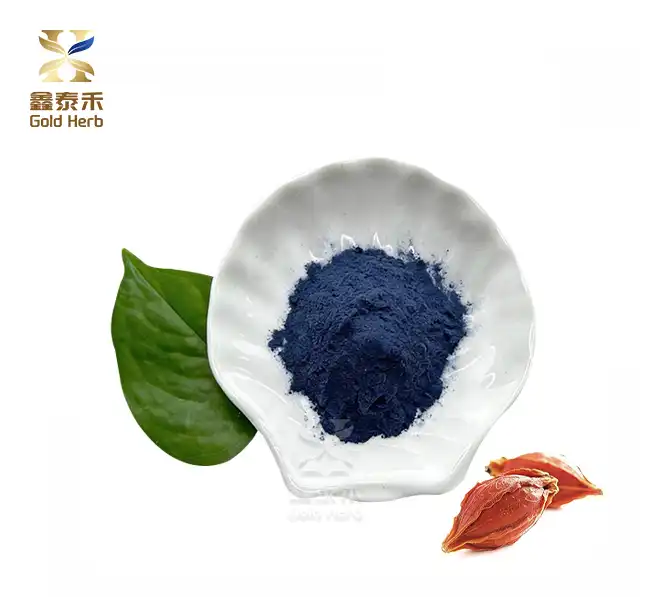
Gardenia Blue is commonly supplied as a dark blue powder or as a prepared color system, depending on the manufacturer and intended application. Gardenia (Genipin) Blue is identified by JECFA as a food color additive with INS 165, and CAS 106441-42-3 is one of the identifiers associated with Gardenia Blue.
Its optical characteristics are also useful when developing specifications. Technical and regulatory materials describe maximum absorbance around the 590 to 600 nm range, although the exact result can vary with the composition and measurement conditions of the color preparation.
For an OEM buyer, the more important question is not simply whether a supplier can provide a particular CAS number. The buyer should understand the product's color value, test method, carrier composition if applicable, solubility, moisture level, microbiological specifications, heavy metal requirements, and recommended storage conditions. These details allow the formulation team to compare samples on a consistent basis.
A supplier should also be able to explain which specifications are fixed and which can be adjusted. For example, a brand may require a certain color strength for a powder product, while another customer may need a different concentration or a liquid color preparation for easier dosing during production.
Where OEM Development Adds Value?
A standard ingredient transaction usually ends when the material is delivered. An OEM color project has a different objective. The supplier and brand need to establish how the color will perform in the actual product before commercial production begins.
This is particularly important because food matrices can differ considerably. Sugar concentration, proteins, fats, acids, minerals, processing temperature, shear, and packaging conditions can all influence the final appearance. A color that performs well in a laboratory water solution may not behave in exactly the same way in a complex finished food.
From Sample Selection to Application Testing
A practical OEM process normally begins with a clear application brief. The food brand can provide information about the product category, target shade, processing temperature, approximate pH range, expected shelf life, packaging format, target market, and anticipated annual volume. The supplier can then recommend an appropriate gardenia blue specification for initial testing.
The next stage is laboratory sampling. Rather than evaluating only the appearance of the raw powder, the development team should test the color in the actual or representative food matrix. This can include accelerated heat exposure, pH adjustment, light exposure, storage testing, and compatibility checks with other ingredients when relevant.
The goal is not to promise that the color will remain unchanged under every condition. The goal is to establish the conditions under which the selected grade provides the desired result and to identify any formulation adjustments required before scale-up.
This approach can save considerable development time. If a brand discovers a compatibility problem only after a commercial batch has been produced, changing the formulation becomes much more expensive than identifying the issue during sample development.
Customization for Different Food Matrices
An OEM supplier should also understand that “Gardenia Blue” is not necessarily a single universal specification for every food product. A confectionery manufacturer may prioritize thermal performance and color strength, while a beverage company may place greater emphasis on dispersion, acidity tolerance, clarity, and storage stability.
For dairy or protein-containing products, the interaction between the color system and the food matrix may require separate testing. Research on gardenia-derived blue pigments has shown that their behavior can be influenced by pH and their interaction with proteins or amino-acid-related components.
This is where OEM formulation support becomes commercially meaningful. Instead of asking a brand to adjust its entire recipe around a standard ingredient, the supplier can work backward from the desired finished product and identify a suitable color specification.

Quality Control Should Be Defined Before Commercial Production
Consistency is one of the most important issues when purchasing a natural food color at commercial scale. A successful sample is useful, but it does not by itself demonstrate that future production batches will deliver the same result.
For Gardenia Blue, the purchasing specification should therefore define measurable quality parameters before the first large order is placed. Color value, appearance, identification, moisture, microbiological limits, and other relevant parameters should be established according to the intended application and market requirements.
The analytical method is also important. If one sample is evaluated using UV-visible spectrophotometry while another is judged only by visual comparison, the results may not be directly comparable. Depending on the specification, suppliers may use UV-visible analysis, HPLC, or other appropriate laboratory methods. Regulatory documentation from the U.S. FDA also describes UV-visible spectrophotometry and HPLC as relevant analytical tools for characterizing gardenia (genipin) blue.
Batch-to-Batch Consistency and Traceability
A professional OEM relationship should include a clear system for batch identification and traceability. The brand should be able to connect a delivered lot with its production records, raw material information, testing results, and certificate of analysis.
This becomes particularly valuable when a brand moves from pilot production to regular commercial purchasing. The agreed specification becomes the reference point for future orders, while retained samples and batch records provide a practical basis for investigating any unexpected difference in color performance.
Packaging and storage should also be discussed during supplier evaluation. Gardenia blue products should generally be protected from unsuitable environmental conditions, and the exact storage recommendation should follow the manufacturer's specification. Rather than using a generic statement such as “store in a cool place,” an OEM supplier should provide documented storage conditions and shelf-life information for the actual product being supplied.

Regulatory Documentation Needs to Match the Target Market
Regulatory support is another important part of an OEM color project, but it should be handled on a market-by-market basis. A certificate held by a supplier does not automatically mean that the ingredient is permitted for every application in every country.
The U.S. regulatory situation is a useful example. The FDA lists Gardenia (Genipin) Blue as a permanently listed, certification-exempt color additive under 21 CFR 73.168, with specified food uses. The FDA's current listing includes sport drinks, flavored or enhanced noncarbonated water, fruit drinks and ades, ready-to-drink teas, hard candy, and soft candy, with the relevant effective date beginning August 29, 2025.
At the same time, a petition filed in August 2026 proposes expanding the permitted uses to additional categories such as carbonated drinks, alcoholic mixed drinks, powdered beverages, bakery products, dairy products, confectionery products, and other foods. That proposal is under review and should not be presented as an already approved expansion.
For food brands, this distinction is important. An OEM supplier should provide regulatory documentation relevant to the destination market and the specific intended application rather than making a broad claim of “global compliance.” This creates a more reliable basis for product registration, label review, and commercial planning.

How to Choose an OEM Gardenia Blue Supplier?
Choosing an OEM supplier should involve more than comparing the price per kilogram. For a food brand, the supplier's ability to maintain specifications, provide technical documentation, support formulation work, and maintain supply continuity can have a direct effect on the final product.
Review Product Specifications and Testing Capability
Start by requesting a current specification sheet and certificate of analysis for the exact Gardenia Blue grade under consideration. The documentation should clearly identify the product, test methods, specification limits, packaging, storage requirements, and shelf life.
If a supplier offers several grades, ask what distinguishes them and which application each grade is designed for. A technically strong supplier should be able to explain why one specification is more appropriate for a particular food matrix rather than simply recommending the highest color value.
The laboratory capability of the supplier also deserves attention. Buyers can ask how incoming raw materials are evaluated, how finished batches are released, how reference samples are retained, and how deviations are handled. These questions provide a much clearer picture of quality management than a long list of certificates alone.
Evaluate OEM Flexibility
Not every food brand needs the same level of customization. Some may only need a standard Gardenia Blue powder with consistent documentation, while others may require a tailored color system, different packaging, application testing, or support during pilot production.
An experienced OEM partner should be able to move between these levels of service without making the process unnecessarily complicated. Communication should also be clear about sample lead times, minimum order quantities, packaging options, production lead times, and commercial batch capacity.
For a growing brand, this flexibility can be especially valuable. The first order may be relatively small, but the supplier should have a realistic plan for supporting larger volumes if the product gains market traction.
Building a More Reliable OEM Development Process
A successful Gardenia Blue OEM project is ultimately about reducing uncertainty before commercial production. The supplier needs to understand what the brand is trying to achieve, while the brand needs enough technical and regulatory information to make an informed purchasing decision.
A strong development process begins with the finished product rather than the ingredient alone. Once the target color, food matrix, processing conditions, target market, and commercial requirements are clear, the supplier can recommend a suitable Gardenia Blue grade and develop samples around those requirements.
The process should then move through laboratory evaluation, application testing, specification confirmation, pilot production, documentation review, and commercial supply. At each stage, both sides should have a clear record of what has been tested and what specification has been approved.
This structure is more useful than simply selecting a supplier based on price. It gives food brands a practical way to evaluate whether an OEM partner can support the entire product development cycle and continue supplying the agreed material after launch.
Conclusion
OEM Gardenia Blue Solutions can give food brands a practical route to developing naturally derived blue food colors while keeping formulation, quality control, documentation, and supply considerations connected. The value of an OEM partnership does not come from the color ingredient alone. It comes from the supplier's ability to match the appropriate specification with the intended food matrix, test the material under realistic processing conditions, maintain defined quality parameters, and provide documentation that supports the target market.
For brands considering Gardenia Blue, the most effective starting point is to define the finished product requirements before choosing the final grade. Information such as food category, target shade, pH, processing temperature, packaging, target market, expected volume, and desired delivery format can help an OEM supplier develop a much more relevant solution. Regulatory status should then be confirmed for the specific market and application rather than assumed from a general certification statement.
As demand for naturally derived food colors continues to develop, suppliers that combine reliable specifications with application testing and responsive OEM support will be better positioned to serve food brands from initial samples through commercial production. For the buyer, that approach creates a clearer development path and makes Gardenia Blue a formulation decision based on measurable requirements rather than marketing claims.
FAQ
1. Is Gardenia Blue Color safe for food applications?
Gardenia Blue Color has a lot of safety standards, such as FDA approval for food uses. The natural color that comes from Gardenia jasminoides Ellis is put through a lot of tests to make sure it meets international standards for food safety. All batches come with documents of analysis that prove the level of purity and the lack of harmful contaminants. This means that it can be used in many food and drink applications.
2. What customization options are available for OEM Gardenia Blue Color solutions?
Professional OEM services allow for a lot of customization, such as changing specifications from E30 to E200, choosing between powder and liquid packaging formats, and making special formulas for certain uses. Technical teams work closely with customers to create personalized solutions that meet the specific needs of processing, pH levels, and safety for a wide range of food types.
3. What are typical production lead times for customized Gardenia Blue Color orders?
Standard Gardenia Blue Color specs keep more than a ton of stock on hand, so orders can be shipped within 24 hours of being confirmed. Customized formulations usually take 7 to 15 working days to develop and make. However, emergency orders can be processed more quickly through special green routes, and they can be delivered within 5 to 7 days.
Partner with Gold Herb for Superior Gardenia Blue Color Solutions
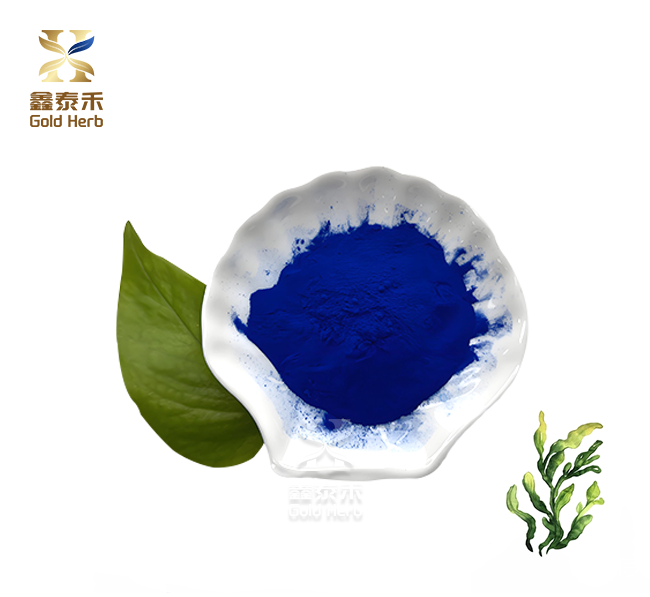
Gold Herb is ready to change the way you make products with our high-quality gardenia blue color options, which are backed by cutting-edge science and knowledge of the global supply chain. Our full OEM services combine the study team of Academician Li Xiaokun's scientific tools with our proven production skills to give you consistent, high-quality natural pigments for your needs. Get in touch with our technical experts at info@newgoldherb.com to talk about making Gardenia Blue Color recipes that are unique to your needs. As a reliable Gardenia Blue Color provider with FDA, ISO9001, HACCP, HALAL, and Kosher certifications, we promise on-time delivery and top-notch technical support to help you succeed.
References
1. Chen, L., Wang, X., & Zhang, M. (2022). Natural Blue Pigments in Food Applications: Stability and Regulatory Compliance Analysis. Journal of Food Science and Technology, 45(3), 234-251.
2. Rodriguez, A., Kim, S., & Thompson, R. (2023). Comparative Analysis of Natural vs. Synthetic Food Colorants: Market Trends and Consumer Preferences. International Food Industry Research, 18(7), 445-462.
3. Anderson, K., Liu, Y., & Patel, D. (2021). Gardenia-Based Pigments: Extraction, Purification, and Industrial Applications in Food Manufacturing. Food Chemistry and Engineering, 29(12), 1823-1840.
4. Williams, J., Nakamura, T., & Brown, S. (2023). Regulatory Frameworks for Natural Food Colorants: Global Standards and Compliance Strategies. Food Safety and Regulation Quarterly, 31(4), 567-584.
5. Martinez, C., Singh, R., & Johnson, P. (2022). Heat Stability and pH Tolerance of Plant-Derived Blue Pigments in Processed Foods. Food Processing Technology Review, 26(9), 301-318.
6. Taylor, M., Zhang, H., & Kumar, V. (2023). OEM Partnership Models in Natural Ingredient Supply: Best Practices for Food Manufacturers. Supply Chain Management in Food Industry, 15(6), 789-806.

Send Inquiry
Related Industry Knowledge
- What Is Ginkgo Biloba Leaf Extract Powder Used For in Pharma R&D
- GMP Red Beet Powder for Nutraceutical Manufacturing
- The Key Health Benefits of Urolithin A You Should Know About
- Urolithin A Benefits for Mitochondrial Health and Longevity
- Chlorophyll vs Sodium Copper Chlorophyllin: What’s the Difference?
- Top Benefits of Fisetin for Cognitive Function and Cellular Health
- 5-Hydroxytryptophan vs Melatonin: Which Is Better for Sleep?
- Is Gardenia Blue Color Approved in EU & USA Markets?
- What Is Dihydromyricetin? Uses & Benefits for USA Nutraceutical Brands
- Resveratrol 98% vs 99%: Which Purity Should You Choose?