
GMP Phycocyanin Powder for Functional Food Manufacturing
Mar 12, 2026
For functional food manufacturers, choosing a natural color ingredient is not simply a matter of finding a strong blue pigment. The ingredient also needs to fit the production process, meet defined specifications, remain consistent from batch to batch, and come with documentation that supports quality control. Phycocyanin has attracted attention in this area because it is a water-soluble blue pigment-protein complex obtained from Spirulina, offering manufacturers a natural option for developing products with a distinctive blue appearance. Another essential layer is added to ingredient selection by GMP manufacturing. A GMP-oriented manufacturing process is more focused on regulated production conditions, documented processes, batch identification, quality testing, and traceability. These considerations may affect how a phycocyanin ingredient works at commercial scale for firms manufacturing functional drinks, powdered food mixes, confectionery items, dairy replacements, or other speciality foods. Therefore, producers will have to consider more than just the intensity of colour while assessing Blue Spirulina Phycocyanin Powder. Purity criteria, colour value, solubility, processing conditions, packaging, storage, testing documentation, and supply capacity all have to be addressed before a raw material can be certified for manufacture.
Why Phycocyanin Fits Modern Functional Food Formulation?
Phycocyanin is a water-soluble pigment-protein complex that is found naturally in Spirulina platensis. Isolated phycocyanin is a more specific blue colour ingredient for food production, since it does not have the wide spectrum of naturally occurring components present in entire spirulina powder, which has a typical green look.
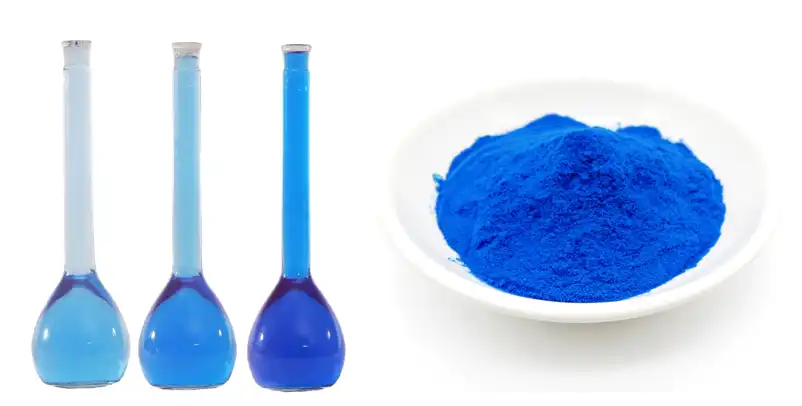
The extraction procedure is crucial as it dictates the properties of the resulting powder. The blue pigment fraction may be separated from the other components of the alga by extraction in water followed by purification. The final powder is vivid blue to blue-purple in colour, and may be used in a wide variety of powdered or liquid food systems, depending on the production method and specification.
This difference is important for functional food makers since it is frequently the objective to create a certain visual effect without altering the overall profile of the ingredient for the completed product. Then a standardised phycocyanin ingredient may be evaluated on colour performance, solubility, concentration and compatibility with the product matrix.
The most often quoted CAS number for phycocyanin is 11016-15-2; however, the identification and specification of any commercial substance should be verified by the maker from the supplier’s technical documentation. This is especially significant when several grades or processes are available.
What Makes a GMP Grade Different?
GMP is more than a marketing label. GMP standards for ingredient manufacture are associated with regulated procedures, sanitation, paperwork, quality checks, and traceability. For the food maker, these controls may ease the qualifying process since the supplier is assumed to have established processes for manufacturing and quality.
A phycocyanin producer with a GMP focus should give information on raw material control, manufacturing batches, analytical testing, packaging, storage, and product release. Buyers are encouraged to verify specific certification and regulatory paperwork needs with the client before placing a commercial order, since these requirements depend on the destination market and the business’s quality system.
That’s also why the specification sheet and certificate of analysis are more valuable than vague statements like “premium quality.” The paperwork should enable the Purchasing and Quality teams to compare the actual material with the approved specification.

Key Specifications to Check Before Purchasing Phycocyanin Powder
The assessment of a proper phycocyanin element should be made both from a technical and procurement point of view. One formulation may need a high colour value; another manufacturer may have more concerns over solubility, microbiological restrictions, packaging, or consistency of supply.
Purity, Color Value, and Analytical Data
"Phycocyanin products are often discussed in terms of purity and colour characteristics, but buyers should first confirm how each specification is defined and measured." Phycocyanin concentration or purity may be assessed using spectrophotometric techniques, and colour value can be utilised to offer information on the strength of the blue pigment.
One of the analytical methods used for assessing the purity of phycocyanin is the A620/A280 ratio. Measurements at various wavelengths may assist in differentiating the pigment fraction from other components associated with protein. Manufacturers should be aware, however, that data from various providers should not be compared without validating the analytical process, sample preparation, and the standard definitions.
Same with claims like “98% purity.” Buyers should check what precisely the % is and if it is the phycocyanin content, a particular analytical computation, or some other product characteristic. A technical specification should be assessed with a current COA, not only on a single headline figure.
In culinary applications, the colour value is equally significant. A more potent colouring agent may let a producer to get the required look at a lower usage level, but the actual amount of use relies on the product matrix, processing circumstances, target shade and regulatory restrictions.
Solubility and Compatibility With Food Matrices
Phycocyanin is water soluble and may be very beneficial in drinks and other items where the colour ingredient must be dispersed throughout an aqueous phase. But solubility does not guarantee that the same outcome will necessarily occur with each formulation.
The final appearance and stability of the pigment may be influenced by the pH of the completed product, presence of salts, proteins, minerals, sweeteners, acids and other functional additives. That is why laboratory testing is an essential aspect of the certification of raw materials.
It is practicable to test a sample of the supplier’s product under the identical circumstances that would be used in the commercial recipe. This allows the formulation team to get a better understanding of dispersion, colour development, sedimentation, and compatibility before putting the ingredient into full-scale production.

Selecting the Right Phycocyanin Grade for Manufacturing
Not all phycocyanin powders are created for the same purpose. Other grades may be produced for colour performance; others may be specified for specific food systems or client needs. The appropriate material choice starts with the knowledge of the end result.
Conventional and Organic Supply Options
Organic and conventional phycocyanin may be used with distinct market strategies. Where the ingredient and supply chain fulfil the standards of the target certification system, organic material may be suitable for goods that are marketed on the basis of a certified organic source.
Standard phycocyanin provides more options for sourcing and may be appropriate for producers whose final goods do not need organic certification. It is not a case of one being better than the other. The selection should be based on the target market for the product, certification criteria, cost structure, and the estimated volume of production.
In large-scale production, continuity of supply is very critical. A composition that works well when tested in the laboratory might nonetheless cause issues in production if the supplier cannot maintain the same standard as the order quantities grow. Manufacturers should also consider manufacturing capacity, lead times, available inventory, and batch uniformity prior to final approval.
Documentation and Batch Traceability
A reliable phycocyanin supply program should provide more than a product name and price quote. “In many cases, quality teams need a technical specification, current COA, batch ID, manufacturing information and any relevant testing records.
Depending on the customer’s needs, analytical documentation might include parameters for microbiology, heavy metals, moisture, identification, colour specs, and other quality indicators. The specific testing panel should be determined between customer and provider.
Another crucial aspect of GMP-oriented production is traceability. The buyer has a better basis for incoming material control and internal documentation when there is a clear link between the final batch and the production records and quality tests of the supplier.

How to Use Phycocyanin in Functional Food Production?
Once the correct grade is decided, the formulation teams have to examine how the ingredient will be incorporated into the manufacturing process. Generally, phycocyanin is better suited for controlled processing circumstances rather than extended exposure to extreme heat or an inappropriate pH environment.
Formulation Development and Pilot Testing
No single level of inclusion applies universally to all functional food applications. The quantity needed depends on the goal colour, product composition, phycocyanin specification, process circumstances and final product look.
Therefore, the inclusion level should be determined by the producer based on laboratory and pilot experiments and not by using a constant dose for diverse goods. Though you’re using the same phycocyanin powder, a beverage, candy, powdered drink, dairy replacement, or frozen food might act quite differently.
Pilot testing also offers the chance to evaluate the ingredient under actual production circumstances. The formulation team may examine how fast the powder disperses, whether extra mixing is needed, and if the final colour changes during filling, storage, or other processing.
Managing pH and Processing Conditions
One of the most critical formulation factors for phycocyanin is pH. The pigment may be unstable in very acidic settings and the look of the finished product might vary with variations in pH.
Instead of one pH range for all formulas, producers should consider the real pH environment of the final product when using phycocyanin. Buffering systems may be beneficial in certain formulations but must be verified for compatibility with the rest of the constituent system during product development.
Temperature also has to be considered. Prolonged exposure to high temperature may change the colour properties of phycocyanin, and so the processing conditions are an essential aspect of formulation design. Assuming the manufacturing process involves a heating step, it may be worthwhile to add the pigment during a later cooling step, assuming the method permits.
Which way is best depends on the goods and equipment. A controlled pilot experiment will assist in deciding whether phycocyanin should be put in before mixing, after chilling, or at some other step in the process.

Functional Food Applications for GMP Phycocyanin Powder
The flexibility of phycocyanin is interesting for numerous kinds of functional foods. It is water-soluble and has a unique blue colour, which allows for formulation possibilities not readily achieved with many other plant powders.
Beverages and Powdered Drink Mixes
Beverages are among the simplest applications since the ingredient is able to spread in an aqueous solution. A blue colour theme may be generated for ready-to-drink drinks, powdered drink mixes, smoothies and other water-based items.
“But the formulation team has to think about the interaction of phycocyanin with acids, minerals, flavour systems, sweeteners and other functional ingredients.” What seems like a stable sample in water in the lab may behave quite differently when the whole formula is put together.
Gummies and Confectionery Products
Phycocyanin may also be explored for gummies, soft candies and other confectionery applications where colour is an essential aspect of product presentation. These products may be more difficult since heating, pH modification, moisture, and gel formation can all affect the final colour.
Thus, producers are advised to evaluate the element during the actual manufacturing sequence and not to add it to a final laboratory sample. The hue you get and the consistency might change as you add pigments.
Dairy Alternatives and Frozen Foods
Other application prospects include plant-based dairy replacements, yoghurt-type products, ice cream alternatives and other designed meals. These matrices frequently include proteins, lipids, minerals, stabilisers and other elements which may interact with a pigment-protein combination.
So the final formulation has to be assessed as a whole system. The appearance of the final product may be affected by mixing circumstances, homogenisation, pH, storage temperature and packaging.
Conclusion
GMP phycocyanin Powder for Functional Food Production provides food makers with a convenient solution to handle a unique natural blue pigment, while gaining better control over raw material specifications and production needs. Phycocyanin from Spirulina may be used in drinks, powdered mixes, confectionery, dairy substitutes, frozen meals, and other formulations where a water-soluble blue colour is needed.
Most crucial is to choose a phycocyanin substance, and not only choose the greatest advertized purity. The manufacturer should assess the analytical technique for the specification, check colour attributes, analyse solubility and formulation compatibility, analyse the material under real processing circumstances, and require the supplier to provide suitable quality documentation. GMP-based manufacturing controls and batch traceability may also help to ensure consistent procurement and quality management.
In addition to product performance, supplier capabilities should be considered for brands migrating from lab to commercial manufacturing. A proper partner should be able to offer samples, technical specifications, COAs, required certification papers, reliable supply, and a straightforward exchange of MOQ and lead times. By linking component specifications with actual production needs, enterprises may build functional food items around phycocyanin in a more pragmatic and regulated way.
FAQ
1. What makes GMP Blue Spirulina Phycocyanin Powder suitable for functional food manufacturing?
GMP approval makes sure that quality, safety, and following the rules are always met, which is important for making food for sale. The 98% purity requirement guarantees effectiveness, and a wide range of standards, such as FDA, ISO9001, HACCP, HALAL, and Kosher approvals, allow entry to markets around the world.
2. How does Blue Spirulina Phycocyanin Powder compare to synthetic blue colorants?
Phycocyanin is natural, unlike manmade FD&C Blue No. 1. It also has health benefits, such as antioxidant and immune-supporting qualities. This dual purpose lets you position your product as having a clean label while also meeting customer demand for natural ingredients.
3. What are the storage requirements for maintaining powder stability?
Keep in the original packages that are tightly closed and out of the light. Keeping the temperature below 25°C extends the shelf life, and keeping moisture out stops it from breaking down. If you store things the right way, the color strength and bioactive qualities will stay the same for the whole shelf life.
4. Can suppliers provide customized formulations for specific applications?
Leading sellers offer a wide range of customization services, such as improving formulations, changing dosage forms, and specifying packages. Development times are usually between 7 and 15 working days for normal changes, but faster services are available for those who need them right away.
Partner with Gold Herb for Premium Blue Spirulina Phycocyanin Powder Supply
You can trust Gold Herb to make Blue Spirulina phycocyanin Powder because we use cutting-edge technology and have a history of making natural extracts. Our GMP-certified facilities guarantee consistent quality, and our strategic relationships with top research institutions promise new ways to meet your functional food production needs. We provide goods that meet the strictest global standards thanks to our many certifications, such as FDA, ISO9001, HACCP, HALAL, and Kosher approvals. Our skilled professionals offer full technical support from formulation to commercial production. They also keep track of their stock accurately and can ship items quickly through a network of warehouses in the United States. Get in touch with our experts at info@newgoldherb.com to talk about your needs and discover the Gold Herb edge in supplying high-quality natural products.
References
1. Zhang, L., Wang, S., & Chen, X. (2023). In the Journal of Food Science and Technology (45(3)): 234–248, it says, "GMP Standards in Phycocyanin Production: Quality Assurance for Functional Food Applications."
2. Smith, K., Thompson, K., & Liu, Y. (2023). "Blue Spirulina Phycocyanin in Functional Foods: Processing Stability and Bioactivity Retention." Food Chemistry International, 78(2), 156–171.
3. Anderson, P., Kumar, R., and Williams, J. (2022). In the International Food Ingredients Review (29(4)), 89–104, it is written about "Procurement Strategies for Natural Food Colorants: Market Analysis of Phycocyanin Supply Chains."
4. Sanchez, A., Chen, H., Brown, D. (2023). In Functional Foods Research Quarterly (18(1)), 45–62, it is written about "Antioxidant Properties of GMP-Grade Phycocyanin Powder in Functional Beverage Applications."
5. Taylor, S., Yamamoto, K., and Singh, V. Food Safety and Regulation Today, 67(8), 312–327. "Regulatory Compliance and Quality Standards for Phycocyanin in Global Functional Food Manufacturing." Journal of Food Safety and Regulation.
6. Mitchell, R., Patel, N., and Johnson, L. (2023). "Spirulina-Derived Compounds Are Playing a Bigger Part in Food Trends of the Future." Natural Products Industry Analysis, 41(6), 178–195.

Send Inquiry
You may like
Related Industry Knowledge
- Top Benefits of Kava Extract for Stress, Mood, and Sleep Quality
- Fenugreek Benefits: Testosterone, Blood Sugar & Health Support
- Unlocking the Power of Pygeum Africanum Extract Powder
- Top Science-Backed Benefits of Broccoli Extract
- Why Urolithin A Is the Future of Anti-Aging Science
- How Sodium Copper Chlorophyllin Works: Detox and Antioxidant Effects
- Ergothioneine Supplement: Skin, Brain & Cellular Protection Benefits
- Fisetin Powder Manufacturing Process & Purity Standards
- Your Trusted 5-Hydroxytryptophan Manufacturer: Powering Your Mood, Sleep System Health Products with Premium 5-HTP
- What are the benefits of Berberine Hydrochloride?