
Can Resveratrol Be Used in Functional Beverages?
Mar 09, 2026
Yes, resveratrol can be used as an ingredient in functional beverage development, but adding it to a drink is more complicated than simply dispersing a conventional botanical powder into water. Resveratrol has attracted attention from beverage formulators because it is a well-known polyphenolic compound that can be sourced from plants or produced through other manufacturing routes. For companies developing premium beverages, the more important question is not simply whether resveratrol can be included, but whether the selected grade is suitable for the beverage system, processing conditions, sensory profile, packaging format, and target market. Resveratrol is generally encountered in the trans-resveratrol form when high-purity specifications are required. Due to its chemical characteristics, resveratrol has certain practical formulation problems such as low water solubility and possible susceptibility to environmental variables such as light and oxygen. This implies beverage producers have to consider the raw material specification and the final formulation as a whole, not just the ingredient as a basic dry powder. This makes the choice of suppliers particularly important for B2B beverage companies. The supplier must be able to provide clear information on the source, purity, analytical procedure, particle characteristics, residual solvents, microbiological quality, heavy metals, and other relevant factors. The supplier must also be able to specify whether the grade given is for incorporation directly, for dispersion systems, or for further formulation.
Why Resveratrol Requires Careful Beverage Formulation?
The first challenge with the formulation is solubility. Resveratrol is not particularly soluble in water naturally,y and putting a standard resveratrol high-purity powder directly into a clear beverage may lead to poor dispersion, sedimentation,n or visible particles. That does not mean that resveratrol is not good in beverages. Rather, it suggests that one must design the form of the raw material and the beverage system together.
Therefore, a clear beverage may have a component structure distinct from a fruit-based beverage, a suspension beverage, a powder-to-water product, or an emulsified formulation. The beverage manufacturer must decide on the desired appearance and consistency before selecting the ingredient specification. For a clear-cut final product, a simple crystalline powder may not be the most feasible starting point. For drinks that naturally include botanicals or fruit matter that will stay in suspension, the formulation is more forgiving.
Another issue to consider is the source of the resveratrol. Resveratrol may be obtained via botanical extraction, synthetic synthesis, or microbial creation depending on the supplier and needs. These routes may require different paperwork and different technical characteristics. This is why manufacturers need to check the legal status of the specific ingredient, not assume that all resveratrol powders are the same on the market. The EU laws specify permitted sources and criteria for trans-resveratrol.
Choosing the Appropriate Resveratrol Grade
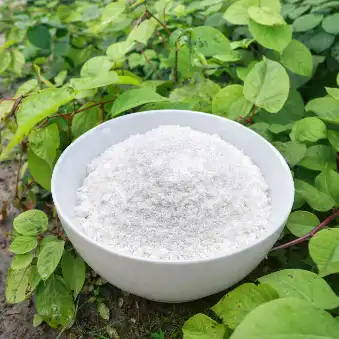
Not all resveratrol powders are immediately suited for functional beverages. The initial step is for the beverage maker to find out the purity and physical features needed. High purity trans-resveratrol is often used for formulations when a specified active component is preferred over a less standardised plant extract.
The Certificate of Analysis is one of the most essential papers in supplier certification. It should clearly state the substance, test technique, purity result, moisture or loss-on-drying as appropriate, and pertinent contaminant parameters. The examination of identification and assay is most often done by HPLC; however, the analytical technique and specification to be utilised should be examined depending on the ingredient standard and the target market.
Particle size may also affect the performance of the formulation. The smaller the particles, the better their dispersion qualities may be; however, just making a substance smaller will not automatically make it water soluble. This is a crucial difference as micronization, water dispersibility, solubilisation and actual dissolution are separate technical terms. A supplier should thus describe the physical treatment used and offer statistics to verify this, rather than merely stating that an ingredient is “highly bioavailable.”
For beverage producers, a realistic resveratrol specification assessment should also include colour, odour, moisture, microbiological limitations, heavy metals, residual solvents when appropriate, and packaging conditions. These characteristics may affect the management of the raw materials and the performance of the final beverage.
Matching Resveratrol With the Beverage Base
The stage following the selection of the ingredient grade is always to verify its compatibility with the beverage base. Processing and storage may act quite differently with fruit juices, botanical beverages, dairy-style beverages, sports formulations, powdered beverage mixes, and ready-to-drink items.
Variables are worth evaluating throughout development. One of them is pH. Instead of using a single pH range for all beverages, formulators should test the real product at the pH at which it is supposed to be consumed and monitor appearance, dispersion, assay, and sensory qualities over time. A composition that works well when mixed may react differently after several weeks of storage.
It is also necessary to consider light exposure. If the drink is in a clear container and is exposed to intense shop lighting, the packaging solution may need to give more protection. This is especially true when the product is formulated to have a constant look and ingredient list throughout its shelf life.
Oxygen exposure may also be determined in product development. The long-term stability may be influenced by the headspace conditions, the filling technique, the packing materials, and the storage temperature. Bev makers shouldn't expect one ingredient technology to solve all their stability issues. They need to do expedited and real-time stability experiments on the actual commercial formulation.
Improving Dispersion and Solubility
Conventional mixing may not be enough for enhancing the physical behaviour of resveratrol for a clear beverage. Depending on the product idea, formulators could consider micronised material, dispersion systems, cyclodextrin-based techniques, emulsification technologies, or other delivery formats specifically provided for beverage applications.
The right solution depends on the ultimate result. Where the beverage is to be rapidly incorporated into an aqueous phase, a water-dispersible grade may be more useful than a normal crystalline powder. However, the word "water soluble" should be used with caution since certain commercial chemicals are technically dispersible and not totally dissolved at the target concentration.
Bench-scale testing is therefore necessary. The formulation team may initially test the ingredient in water and then go on to the whole beverage matrix. This will assist in ascertaining if precipitation is induced by resveratrol, or beverage pH, minerals, proteins, flavour components, sweeteners, emulsifiers, or interactions between many constituents.
The same step should be used to assess processing conditions too. The final outcome may be affected by mixing speed, sequence of addition, temperature, holding duration, and filtering. A formulation that seems robust in a laboratory beaker may need more optimisation when scaled up to a commercial manufacturing line.
Managing Flavor and Appearance
Resveratrol may provide sensory problems, especially when administered at a level that is perceptible in the final beverage. That is why flavour development should not be relegated to the latter stage of product development.
Fruit-forward recipes are an excellent starting point since flavour profiles may more readily incorporate botanical overtones than highly neutral drinks. Berry, grape, citrus and other highly characterised characteristics may give other options to balance the entire sensory experience. However, the proper decision is determined by the particular grade of resveratrol and the other elements in the recipe.
The choice of sweetener has to be looked at as part of the whole flavour system. More sweetness isn’t necessarily the answer to bitterness, and too much sweetness may be a whole other issue. So beverage formulators may have to consider acidity, flavour intensity, sweetness, and mouthfeel in combination rather than tweaking one factor.
Appearance is just as essential. If the product idea is a clear beverage, then visible sediment may have a negative impact on customer impression even if the ingredient is still chemically present. In a naturally foggy or particle beverage, however, the same physical behaviour might be more subtle. So the product format should drive the technological approach.
Quality Control Before Commercial Production
Quality monitoring starts long before the resveratrol ever gets to the beverage plant. Procurement teams should work with the supplier to develop a raw-material specification and to ensure that each manufacturing batch is backed by the right paperwork.
The certificate of analysis should be checked against the specified standard and not only against a single purity number being there. Consider Identity, assay, moisture, microbiological characteristics, heavy metals, residual solvents, and other relevant tests as per intended usage and regulatory requirements.
Supplier documentation is also vital for traceability reasons. Manufacturers need to know where the ingredient is manufactured, how batches are recognised, how supplies are packed and how variations are managed. A supplier that can supply consistent batch documentation is often simpler to qualify for long term beverage manufacturing than a provider that merely supplies a basic specification sheet.
Periodic third-party testing may also be acceptable for bigger beverage operations. Independent testing may assist in validating chosen quality requirements and give an extra level of trust when many batches of raw materials are being acquired over a long time.
Conclusion
Resveratrol may be added to functional beverage products, but effective development is much more than just choosing a high-purity powder. Solubility, dispersion, sensory qualities, pH, light exposure, processing conditions, packaging, stability, and regulatory requirements must all be simultaneously examined during formulation.
The most critical stage for beverage makers is to make sure that the resveratrol specification matches the real product idea. Some applications may be suited to a traditional high purity powder, while others may need a micronised or water dispersible format. Supplier paperwork, batch uniformity, analytical testing, and regulatory assistance should also be reviewed before making a long-term purchase choice.
A good development method enables manufacturers to examine resveratrol in terms of actual formulation performance, not just marketing promises. Beverage businesses may cooperate with a certified ingredient supplier and test the substance under real production and storage settings to evaluate whether resveratrol is a viable match for their functional beverage range with adequate quality and regulatory standards.
FAQ
1. What is the optimal resveratrol dosage for functional beverages?
Functional drinks usually have 5 to 50 mg of resveratrol per dose, and most store-bought ones aim for 10 to 25 mg to get the best mix of effectiveness and price. This dosage level is in line with a clinical study that shows antioxidants are helpful, and it also meets the rules for all foreign markets.
2. How does resveratrol powder stability affect beverage shelf life?
When made correctly with the right pH buffers and antioxidant systems, high-quality Pure Resveratrol Powder stays stable for 18 to 24 months. Light-resistant packaging and temperature control during shipping keep the strength, so finished drinks stay true to what they say on the label for the whole time they're supposed to last.
3. What certifications should suppliers provide for beverage-grade resveratrol?
Some important certifications are FDA approval, ISO9001 quality management, HACCP food safety standards, and religious certifications like Kosher and Halal. Third-party testing verification and full Certificates of Analysis give business products even more quality assurance.
4. Can resveratrol powder be combined with other functional ingredients?
Indeed, resveratrol works very well with vitamins, minerals, amino acids, and other plant products. Combining antioxidants like vitamin C and E in a way that works well together makes the product more stable and gives it extra health benefits that make it stand out and appeal to customers.
Partner with Gold Herb for Premium Pure Resveratrol Powder Supply
Gold Herb can help you make useful drinks by giving you pharmaceutical-grade pure resveratrol powder that is made under strict quality controls and has a lot of certifications, such as FDA, ISO9001, and HACCP approvals. Our technical knowledge, gained through smart relationships with top research institutions, makes sure that the ingredients in your formulations work at their best. We keep a lot of inventory on hand, so we can quickly fill orders with standard specifications—within 24 hours—while our customization options allow us to offer unique solutions in 7–15 working days. As a reliable Pure Resveratrol Powder provider with more than 200 clients in 30 countries, we offer reasonable prices, dependable shipping support, and full technical support as you create your product. Email our team at info@newgoldherb.com to talk about your particular needs and ask for samples to test.
References
1. Baur, J.A., & Sinclair, D.A. (2006). Therapeutic potential of resveratrol: the in vivo evidence. Nature Reviews Drug Discovery, 5(6), 493-506.
2. Cottart, C.H., Nivet-Antoine, V., & Beaudeux, J.L. (2014). Review of recent data on the metabolism, biological effects, and toxicity of resveratrol in humans. Molecular Nutrition & Food Research, 58(1), 7-21.
3. Nunes, S., Danesi, F., Del Rio, D., & Silva, P. (2018). Resveratrol and inflammatory bowel disease: the evidence so far. Nutrition Research Reviews, 31(1), 85-97.
4. Poulsen, M.M., Vestergaard, P.F., Clasen, B.F., Radko, Y., Christensen, L.P., Stødkilde-Jørgensen, H., ... & Jessen, N. (2013). High-dose resveratrol supplementation in obese men: an investigator-initiated, randomized, placebo-controlled clinical trial of substrate metabolism, insulin sensitivity, and body composition. Diabetes, 62(4), 1186-1195.
5. Smoliga, J.M., Baur, J.A., & Hausenblas, H.A. (2011). Resveratrol and health–a comprehensive review of human clinical trials. Molecular Nutrition & Food Research, 55(8), 1129-1141.
6. Walle, T. (2011). Bioavailability of resveratrol. Annals of the New York Academy of Sciences, 1215(1), 9-15.

Send Inquiry


Related Industry Knowledge
- Is fulvic acid hard on the liver?
- Blue Spirulina Phycocyanin Price Guide for Global Buyers
- Maca Powder Types: Red vs Black vs Yellow Compared
- What is maca powder extract?
- Astaxanthin vs Collagen: Which Is Better for Skin Health?
- Fisetin Benefits for Brain Health and Longevity Explained
- Is berberine bark powder good for diabetics?
- What is the use of garcinia cambogia powder?
- Ergothioneine Powder: A Powerful Antioxidant for Cellular Protection
- Is Gardenia Blue Color Approved in EU & USA Markets?